This story was originally published by Inside Climate News and is reproduced here as part of the Climate Desk collaboration.
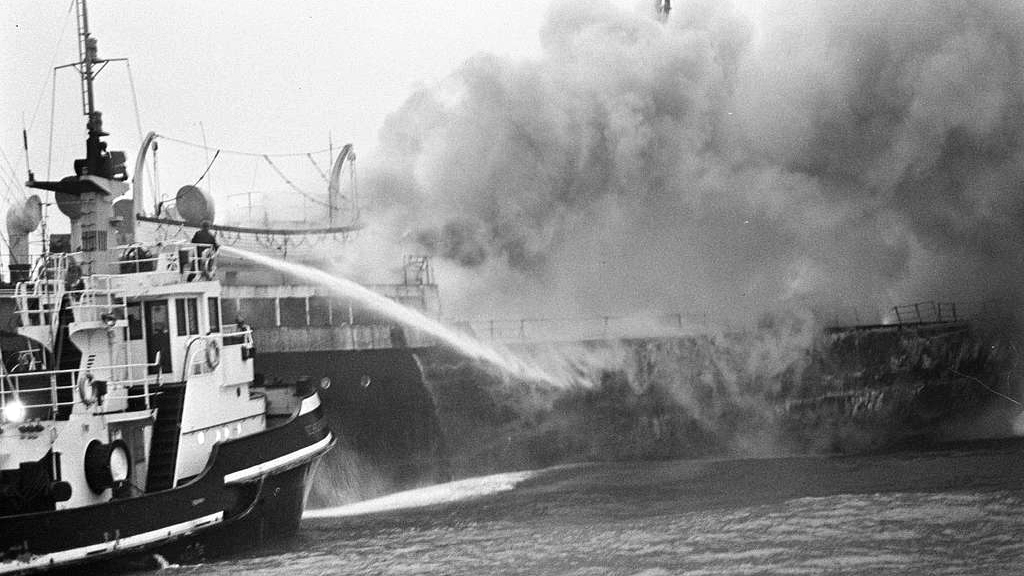
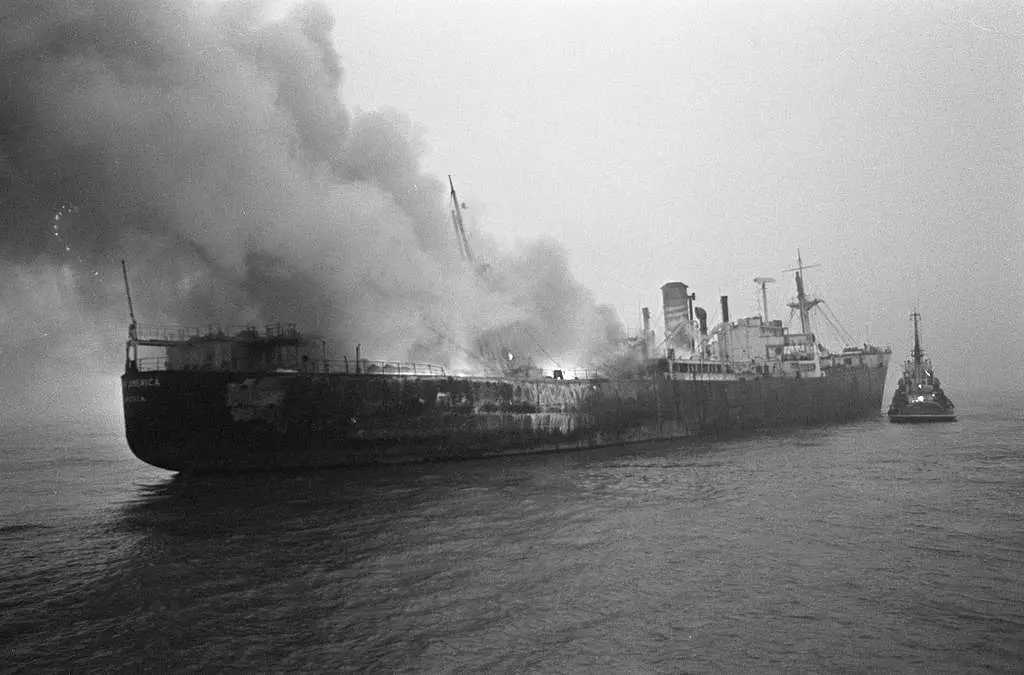
In January 1966, a South African ship caught fire at sea. In port in Bristol, England, after firefighters pried open the smoking container, the conflagration spread and burned for five days. A little over a month later, a Liberian steamship caught fire near Rotterdam, ignited a storage area with barrels of petrol and sank. The month after that, a Danish ship caught fire off Long Beach, California, injuring three firefighters, killing a longshoreman and causing over a million dollars in estimated damages.
The culprit in each fire was fishmeal, a dark yellow powder made by drying and pulverizing fish that, if left untreated, is known for spontaneously combusting as it decays and oxidizes.
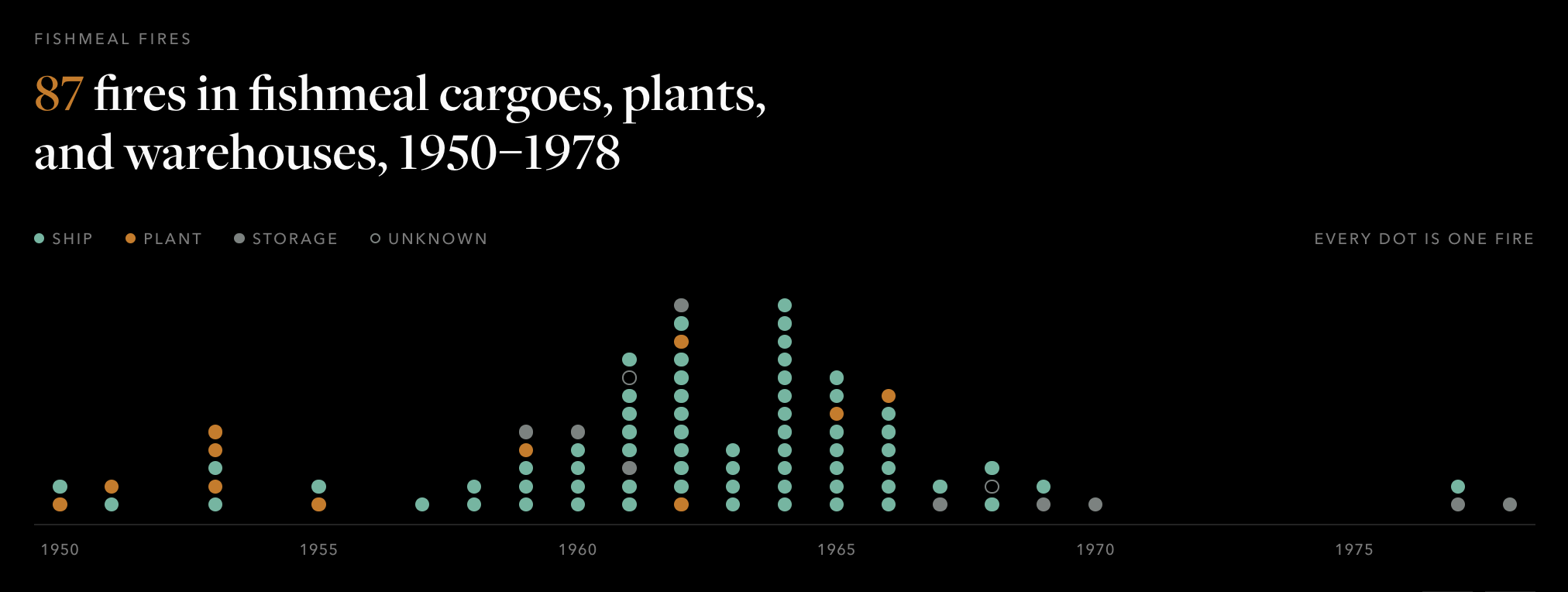
Tied to at least 90 ship and plant fires from the 1950s through the 1970s, fishmeal’s combustibility was a serious worry for seafarers, insurers and dock workers, according to a sweep of historical…