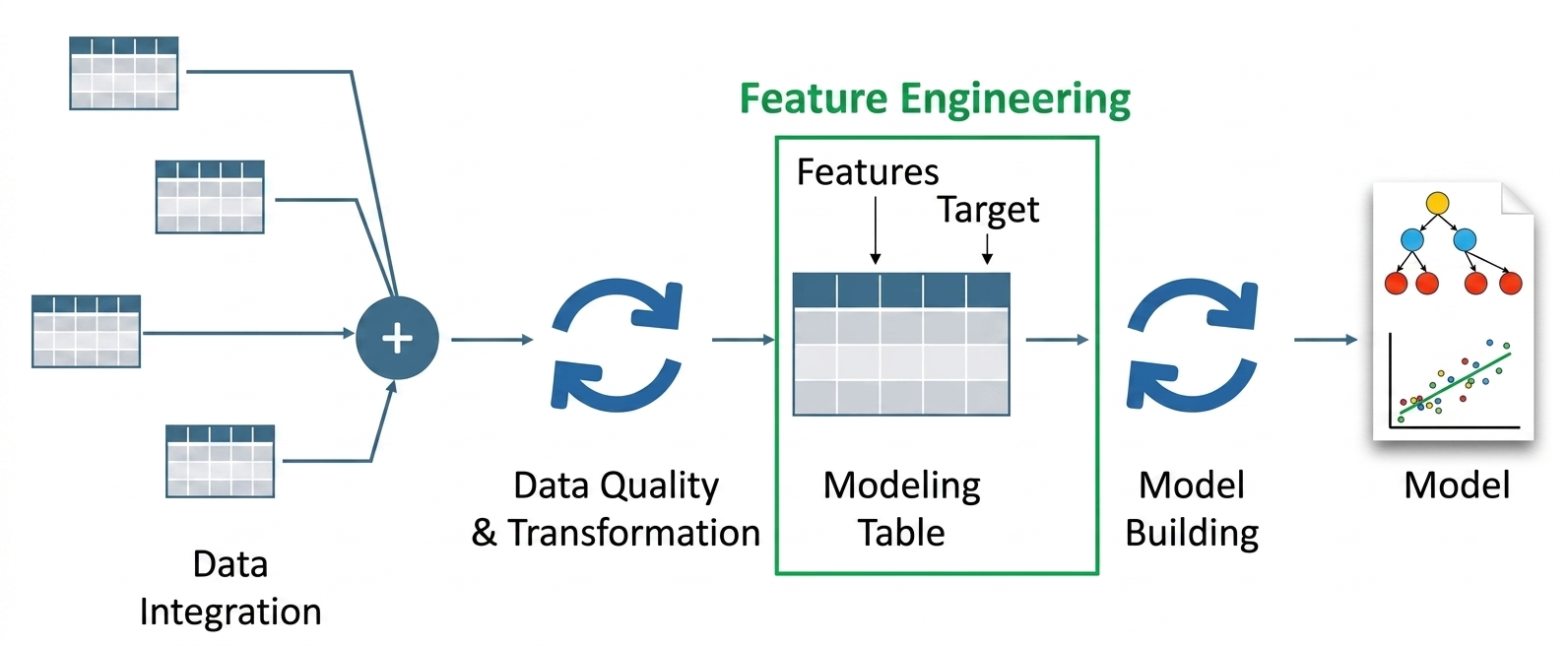
Feature engineering is the foundation of strong machine learning systems, but the traditional process is often manual, time-consuming, and dependent on domain expertise. While effective, it can miss deeper signals hidden in unstructured data such as text, logs, and user interactions.
Large Language Models change this by helping machines understand language, extract meaning, and generate richer features automatically. This shift opens new ways to build smarter ML pipelines. This article offers a practical guide to feature engineering using LLMs.
Table of contents
What is Feature Engineering with LLMs?
The Shift: From Manual Features to Semantic Features
Core Techniques in Feature Engineering with LLMs Embeddings as Features
Prompt-Based Feature Extraction
Schema-guided extraction
Semantic Feature Generation
Context-Aware Feature Creation
Hybrid Feature Spaces (Multi-Modal Pipelines) Combining Tabular, Text, and Embeddings
Multi-Modal Feature Pipelines
End-to-End Flow (Data → LLM → Features →…