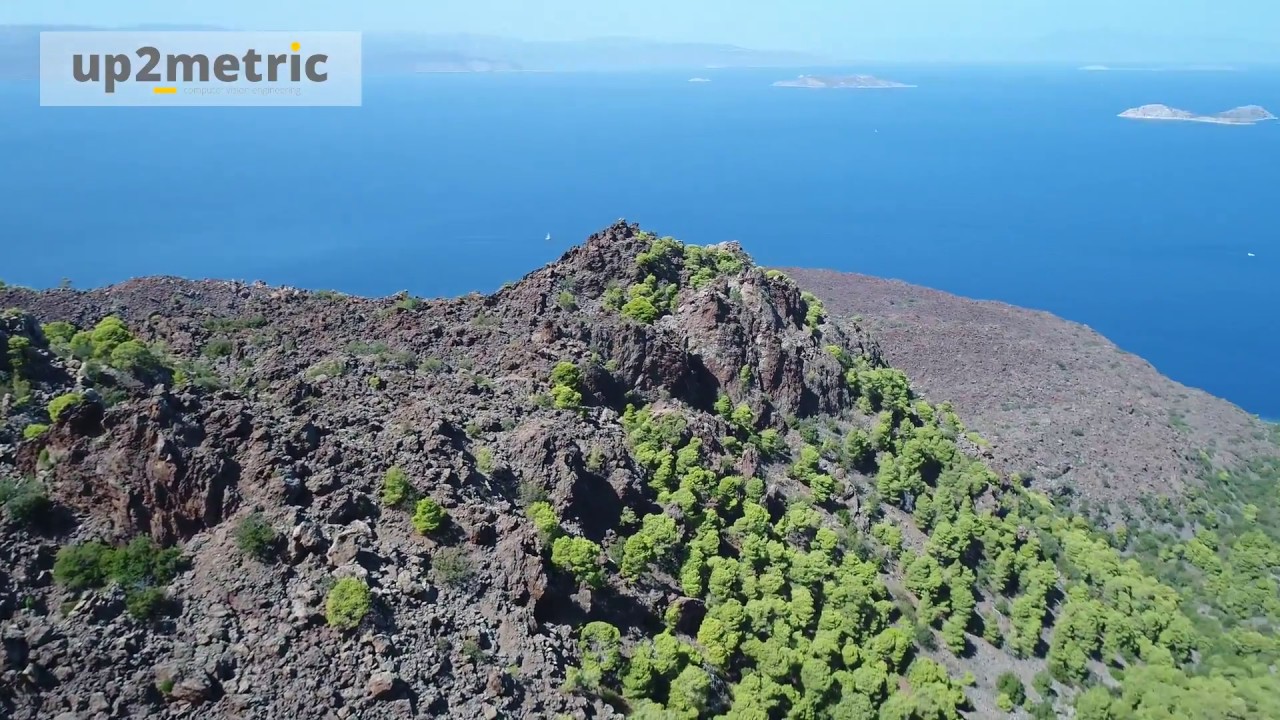
By reconstructing a 700,000-year history of Methana volcano, geologists found a prehistoric phase when it appeared inactive on the surface, despite magma building up below ground
Lava, seen as darker brown rocks, from Methana's most recent eruption flows through ancient limestone into the sea. Răzvan-Gabriel Popa / ETH Zurich
The last eruption of Greece’s Methana volcano was around 250 B.C.E . Ever since that event, which was recorded by the Greek historian Strabo , the mountain has lurked silently, just across the Saronic Gulf from Athens. But the volcano’s calm exterior could be masking a tumultuous—and potentially dangerous—inner life.
“It’s important for our society to understand that for volcanoes, quiet doesn’t always mean safe,” Razvan-Gabriel Popa , a volcanologist at ETH Zurich in Switzerland, tells Reuters ’ Marta Serafinko.
In a study published April 22 in the journal Science Advances , Popa and a team of geologists documented the past 700,000 years of the Methana volcano’s history, which…