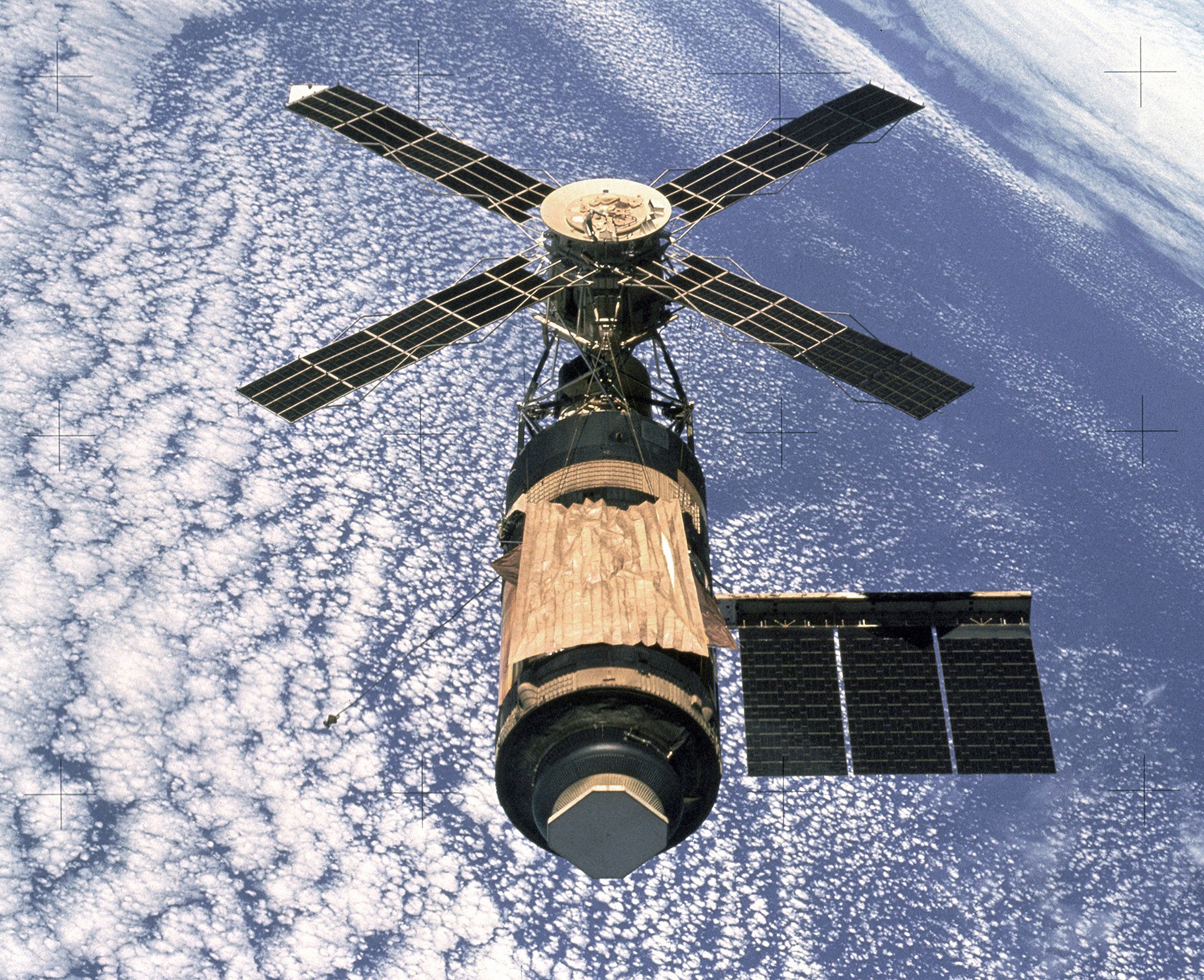
A sunshade drapes across Skylab’s hull, replacing the station’s original micrometeoroid shield that tore away during launch. The repair stands as one of the first examples of in-space servicing. Credit: NASA
There are likely fewer satellites in Earth orbit right now than there will be at any point for the rest of your life.
It’s a sobering thought. The threats from our ever-more-crowded skies are well documented: light pollution from megaconstellations, aluminum oxide accumulating in the upper atmosphere as satellites burn up on reentry, and the possibility of a chain reaction of collisions and debris that could render entire orbital regions unusable for generations — to name a few. So what can we do?
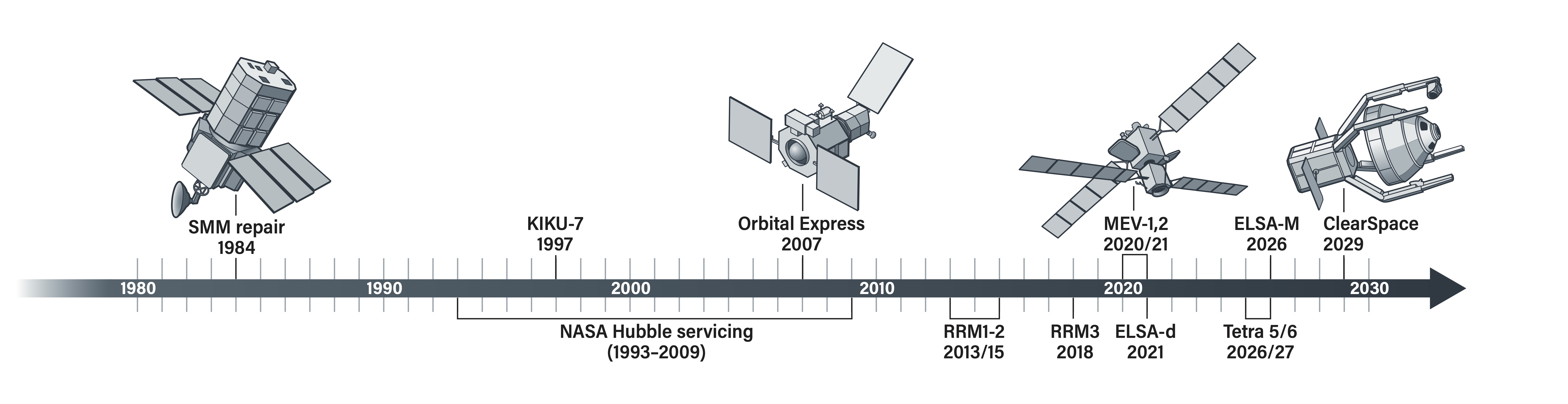
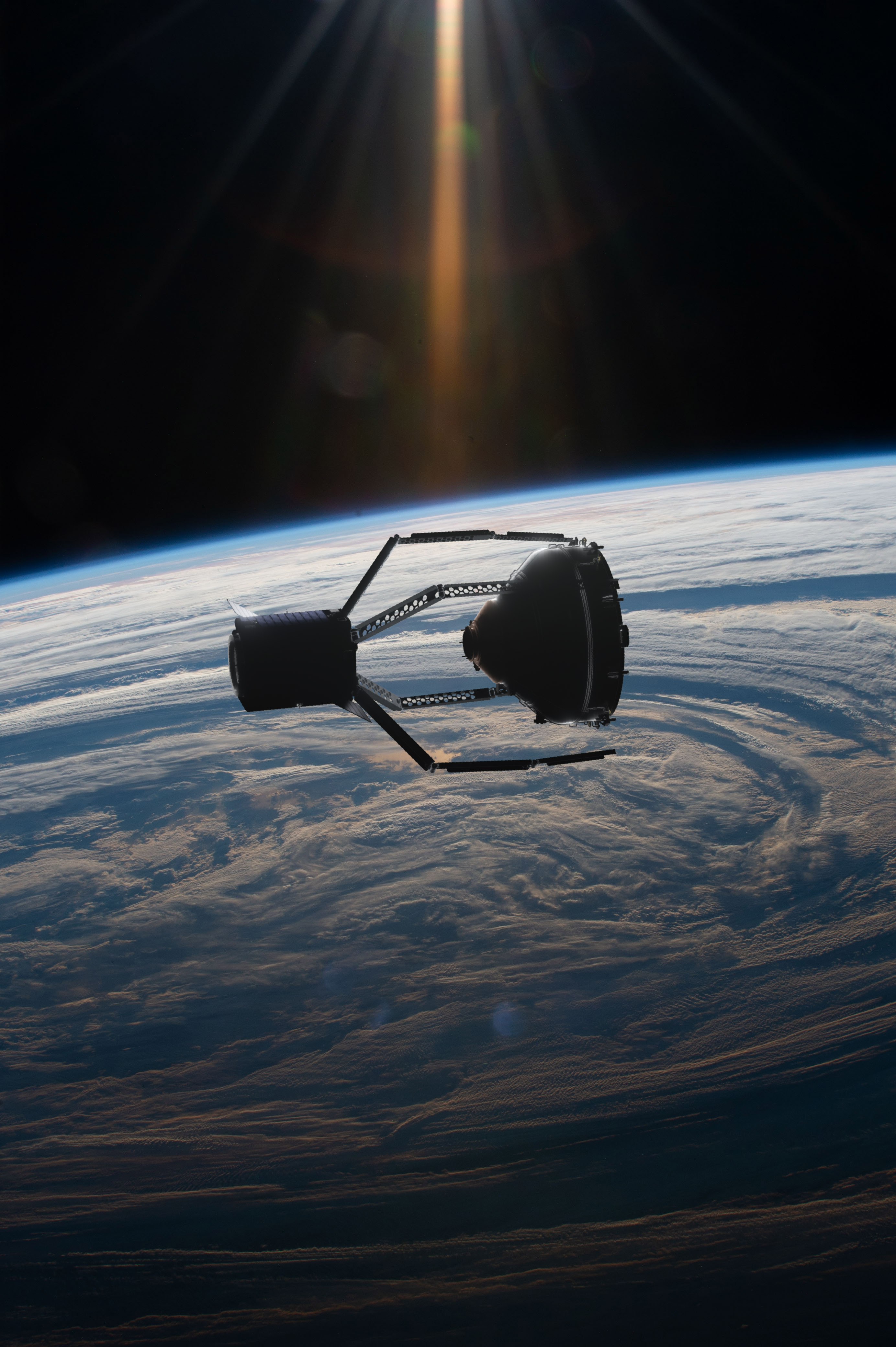
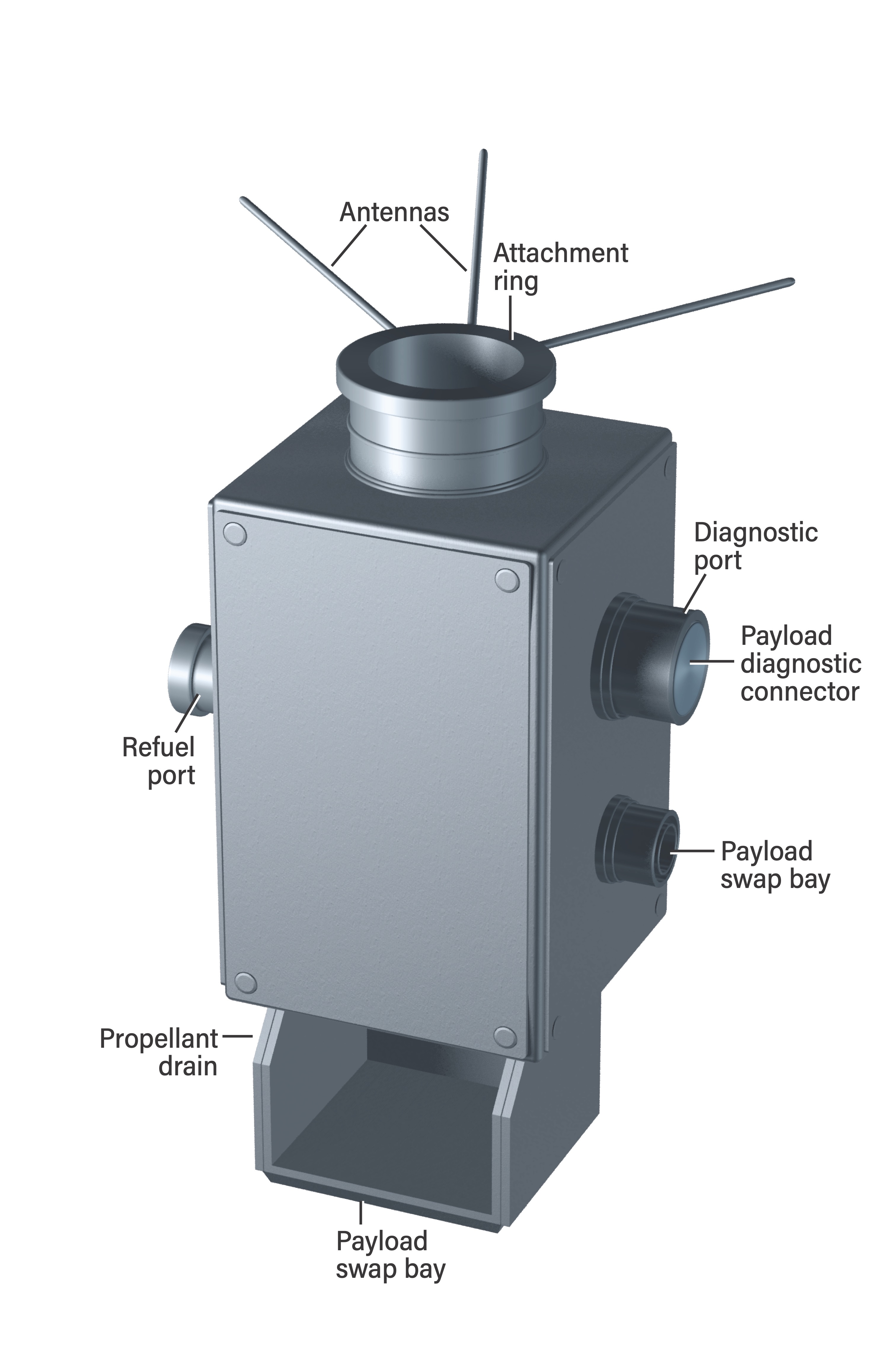
One possible solution lies in the emerging satellite-servicing industry — also known as in-space servicing, assembly, and manufacturing (ISAM). Satellites can be refueled, repaired, and repositioned — extending their operational lives and reducing the need to launch replacements.…