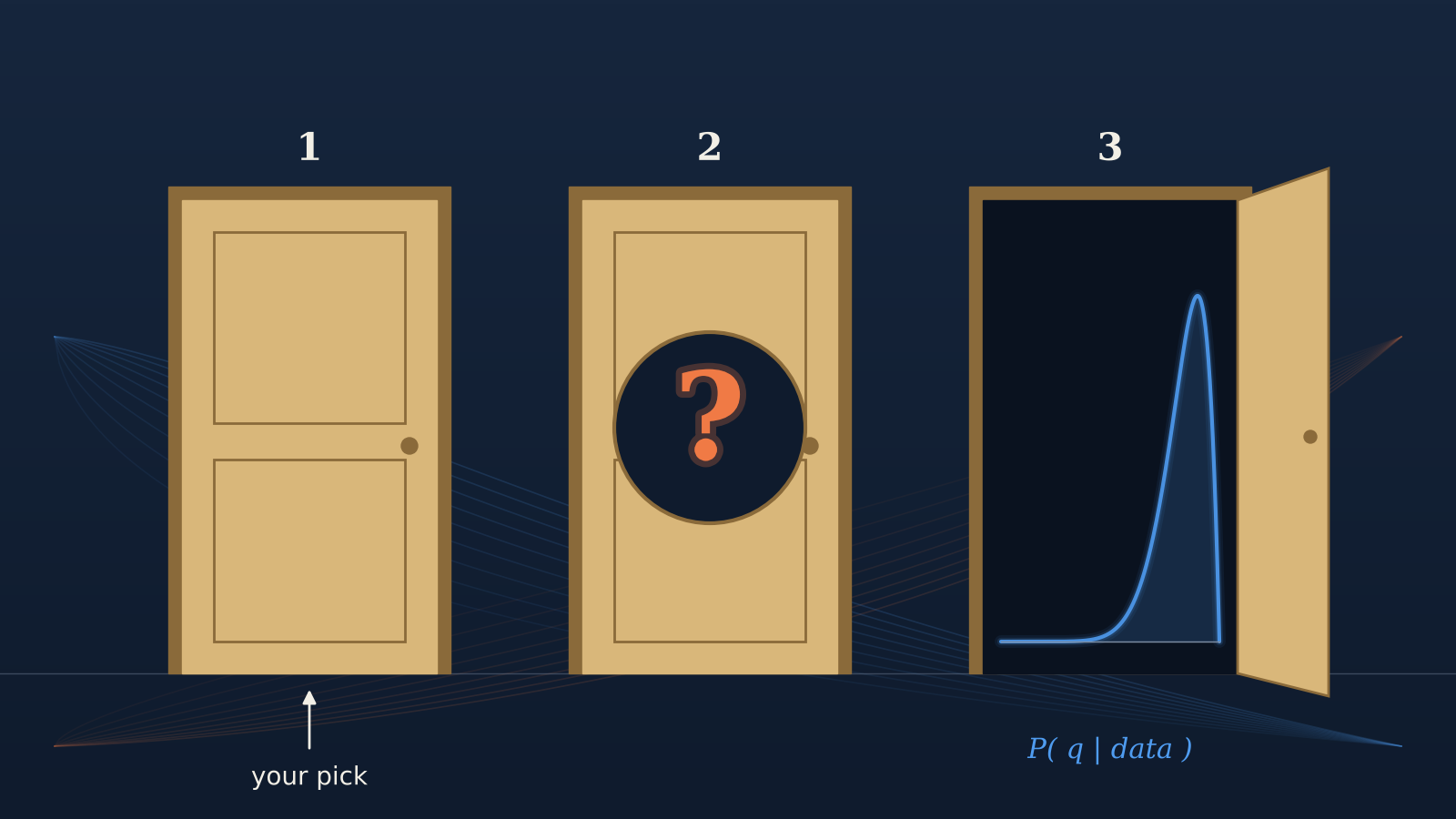
Suppose you're on a game show, facing three closed doors. Behind one of them there is a car. Behind the other two are goats. You pick one, say door 1. The host knows what's behind every door, and he opens one of the other two, say door 3, to show you a goat. Then he asks whether you want to stay with door 1 or switch to door 2.
Most people say it doesn't matter. Two doors, one car, so it's 50–50. That answer feels obvious, but it's wrong.
Marilyn vos Savant answered exactly this question in her Parade column in September 1990 and got roughly 10,000 letters back. Close to a thousand came from people with PhDs, and most of them said she'd blown it. Even Paul Erdős (a famous mathematician) refused to believe her until a friend ran a computer simulation in front of him.
What everyone eventually found out is that Marilyn vos Savant was right about her finding. Switch doors and you win two times out of three.
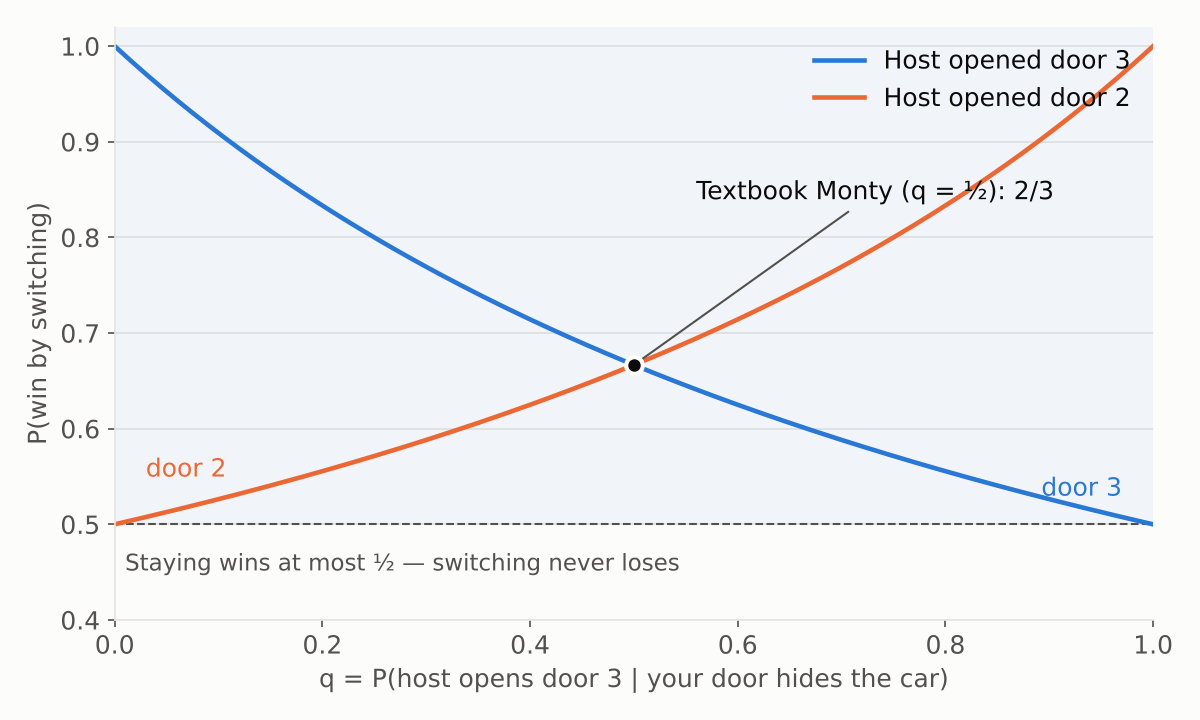
Except that sentence hides an assumption, and I think the assumption is the interesting part.…