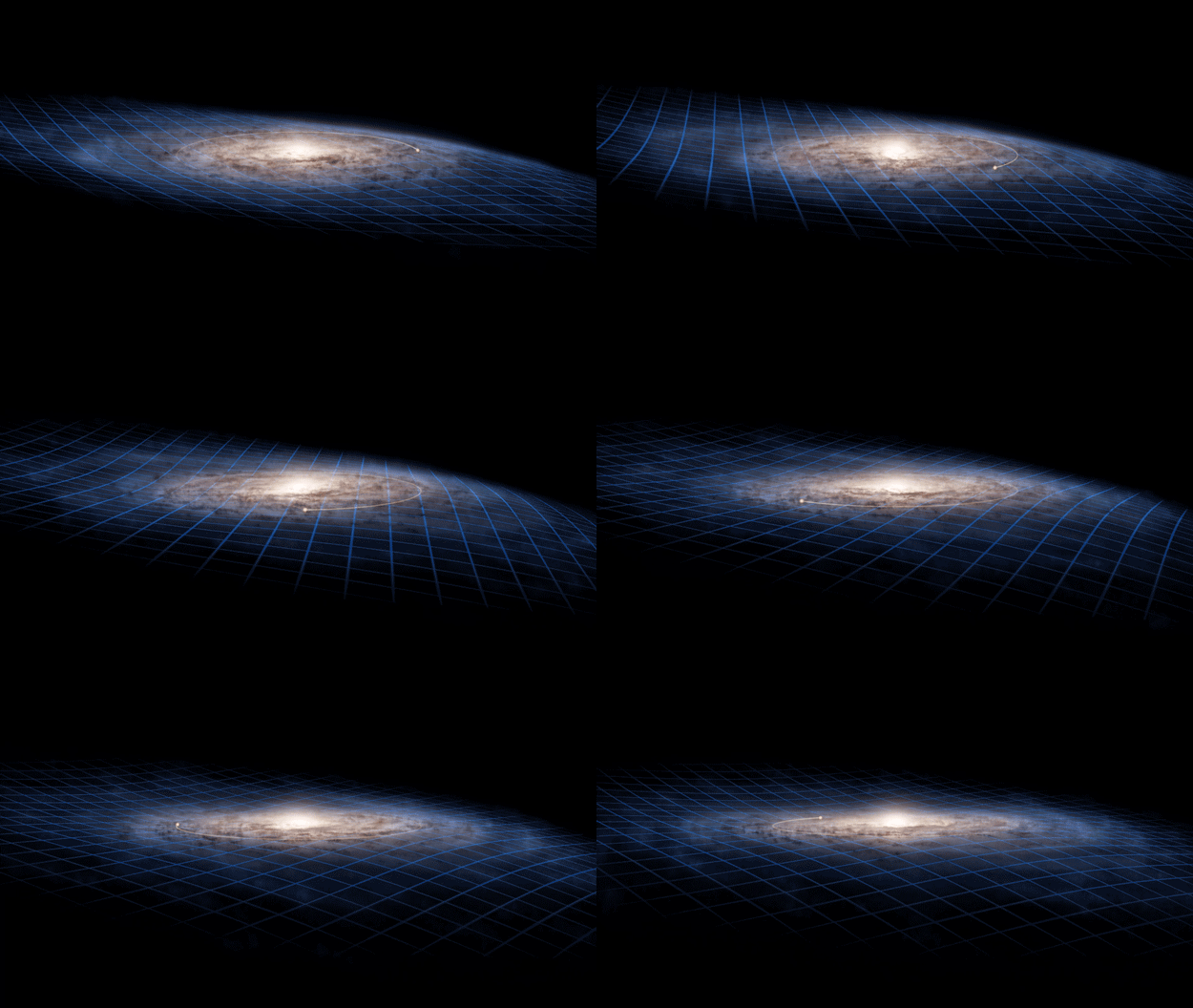
Astronomers weigh the Milky Way’s mass at long last
DESI and Gaia data, combined, on over 10,000 stars in the galactic halo provide the first accurate mass measurement of our home galaxy.
November 16, 2026
The spiral galaxy UGC 12158, with its arms, bar, and spurs, as well as its low, quiet rate of star formation and hint of a central bulge, is an excellent analogue for the Milky Way, seen nearly perfectly face-on. While we can measure many overall properties of galaxies such as this, like its starlight, its overall mass, and its rate of rotation, similar measurements for our own Milky Way are much more challenging due to our vantage point: of being stuck within it.
Credit : ESA/Hubble & NASA
Although we live right here within it, measuring the total mass of the Milky Way has proven to be an incredibly difficult task, with estimates ranging from 500 billion to 2 trillion solar masses, including the full dark matter halo.
However, in the most comprehensive effort to date, a team combined DESI data with…