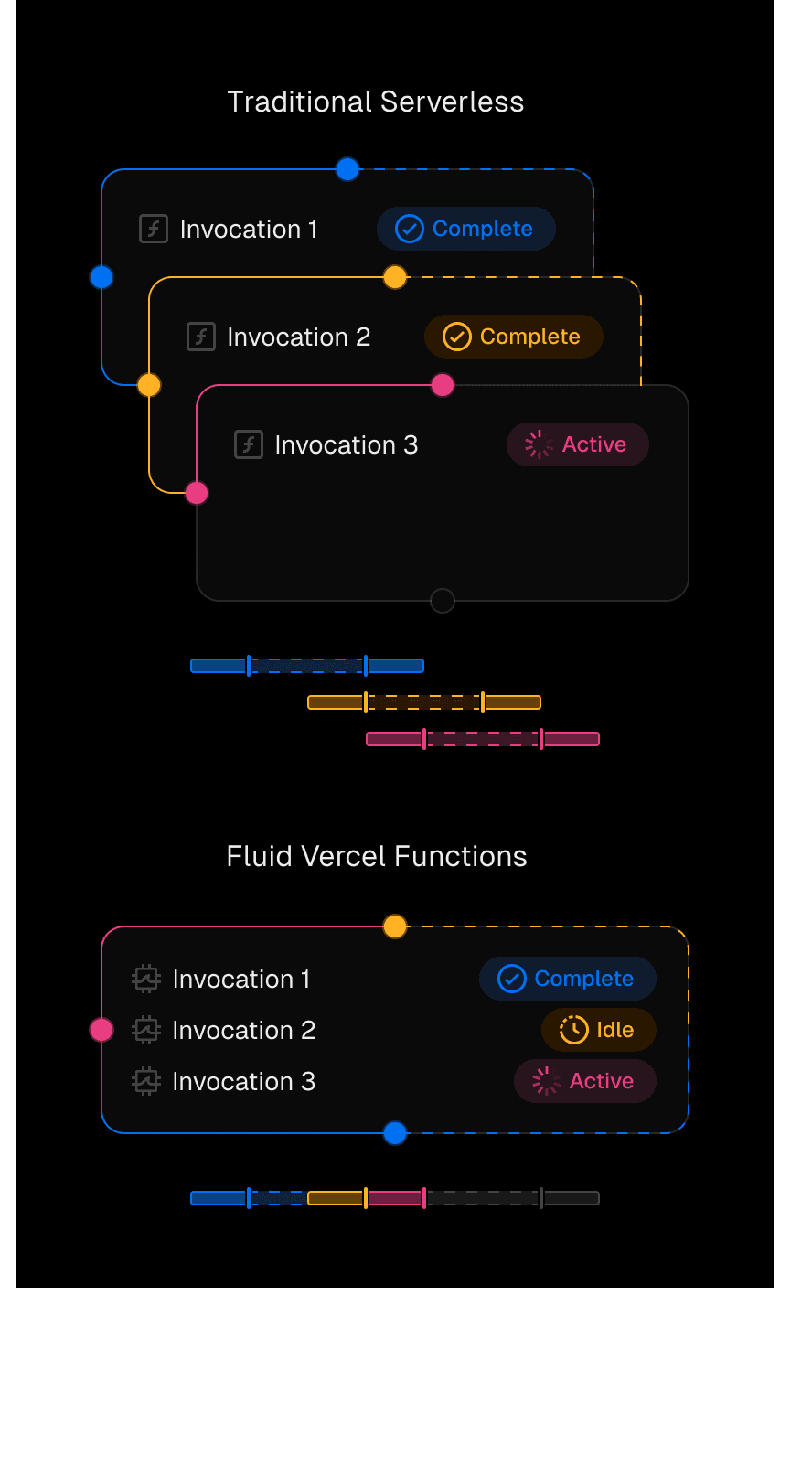
AI’s rapid evolution is reshaping the tech industry and app development. Traditional serverless computing was designed for quick, stateless web app transactions. LLM interactions require a different sustained compute and continuous execution patterns.
This design mismatch presents an opportunity for a new compute model tailored for AI workloads.
Link to heading LLM interactions: A sequence, not a single request
Engaging with an LLM is more than just sending a request and receiving a response. Unlike traditional web apps, where most requests are processed in milliseconds, LLM workloads involve extended execution times and periods of inactivity.
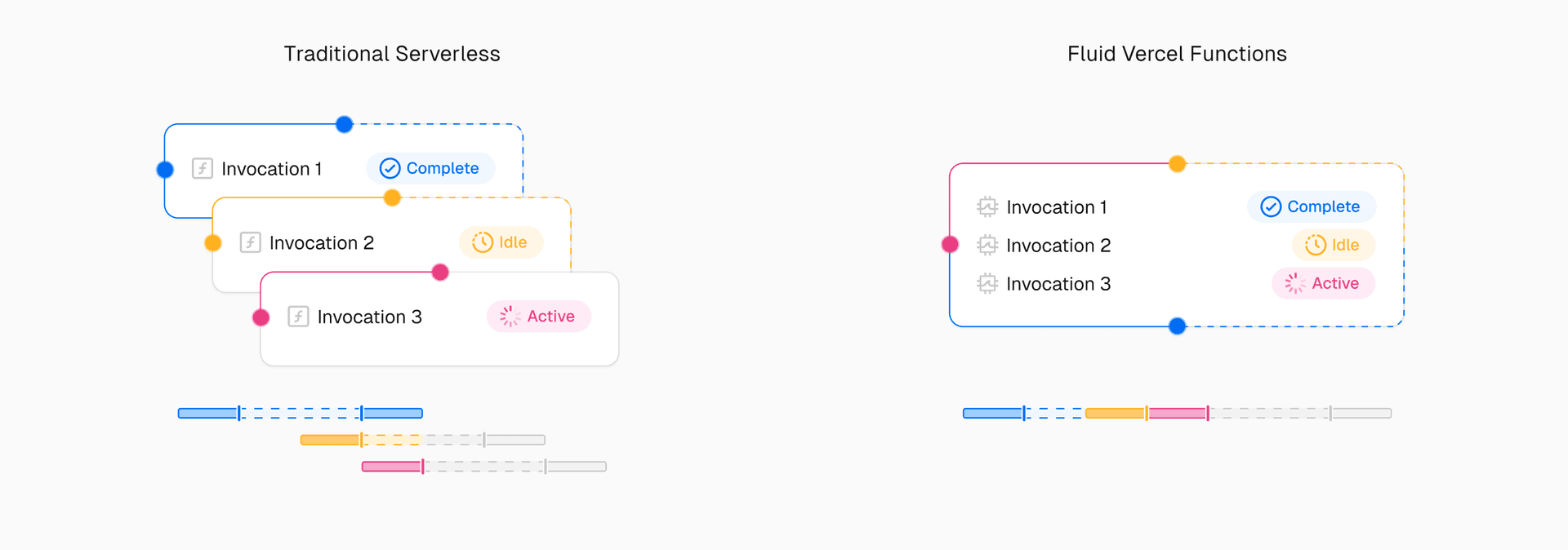
Each interaction follows a multi-step process:
Serverless function is invoked: The function initializes and prepares to process the LLM request
Function sends request to LLM API: At this stage, the function is actively consuming compute resources
Function enters idle state waiting for response: This can take several seconds to minutes, but the function remains…