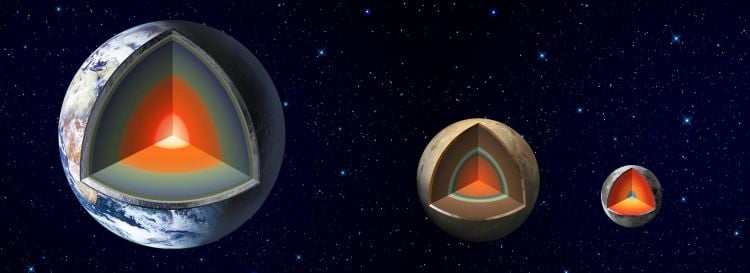
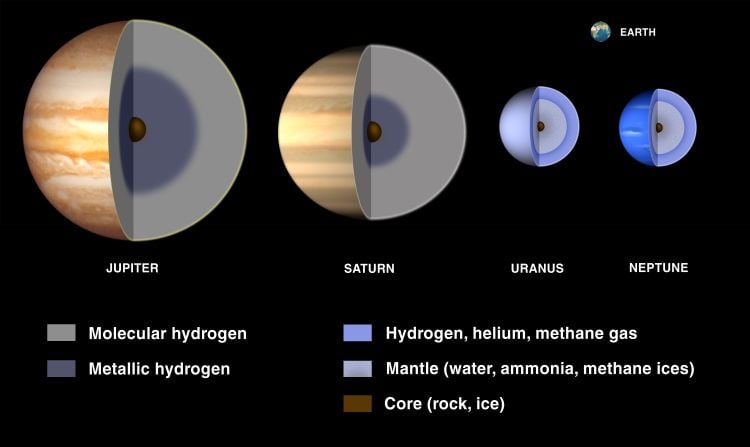
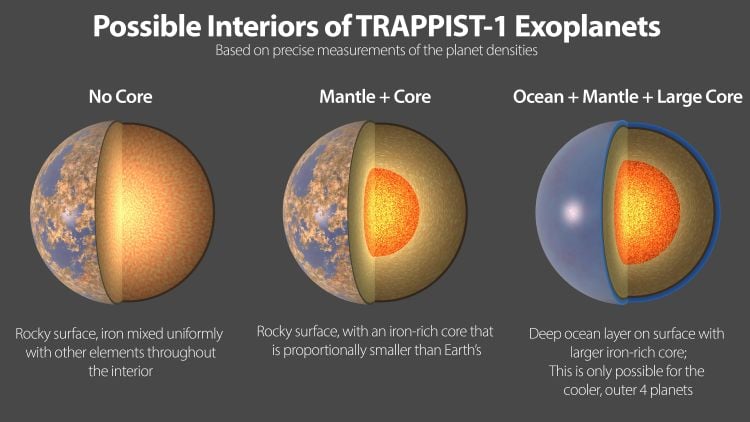
Studying the interiors of planets is essential for understanding planetary formation, evolution, and their ability to potentially host life as we know it. To accomplish this, researchers use a combination of Earth as an analog, computer models, meteorites, and data collected from other planetary bodies for studying their interior compositions. As a result, scientists have determined that the elements of magnesium and silicon are the most abundant planetary building blocks. And, under extreme pressures like the interior mantle of our planet, it forms magnesium oxide (MgO) crystals. But how does this same process occur under different pressures and temperatures on other planets like gas giants and larger rocky exoplanets called super-Earths?
Now, a collaborative team of researchers from the Lawrence Livermore National Laboratory (LLNL) and Johns Hopkins University might be one step closer to solving this conundrum.…