The 19th-century craftsman extolled the universal right to beauty. The problem was that his handmade items were necessarily expensive
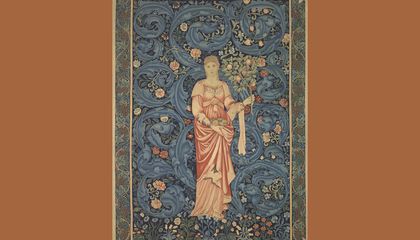
Pomona , designed by William Morris and Edward Coley Burne-Jones, made for Morris and Company, 1885. William Morris called tapestry “the noblest of the weaving arts … in which there is nothing mechanical.” Courtesy of The Whitworth, The University of Manchester; Photograph by Michael Pollard
Born into a wealthy English family, William Morris (1834-1896) grew up in the countryside, honing a love for nature that found expression in fabric and wallpaper he designed for his successful firm, Morris & Company. An activist as well as an artist and businessman, he loathed the inequity of Victorian society and the soullessness of the industrial age, coming to embrace revolutionary socialism.
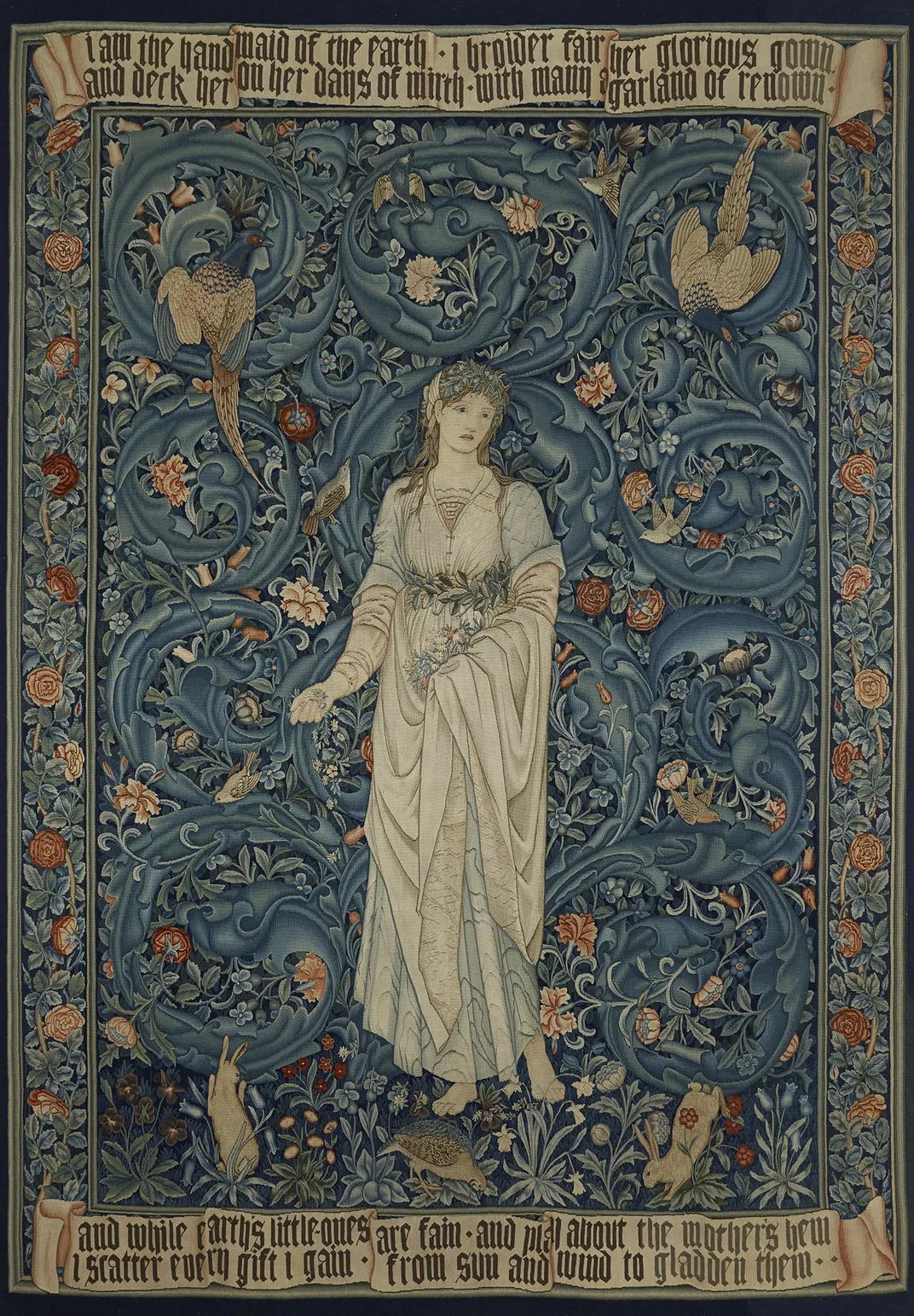
Flora , designed by William Morris and Edward Coley Burne-Jones, made by William Knight, William Sleath and John Martin for Morris & Company, 1885.…