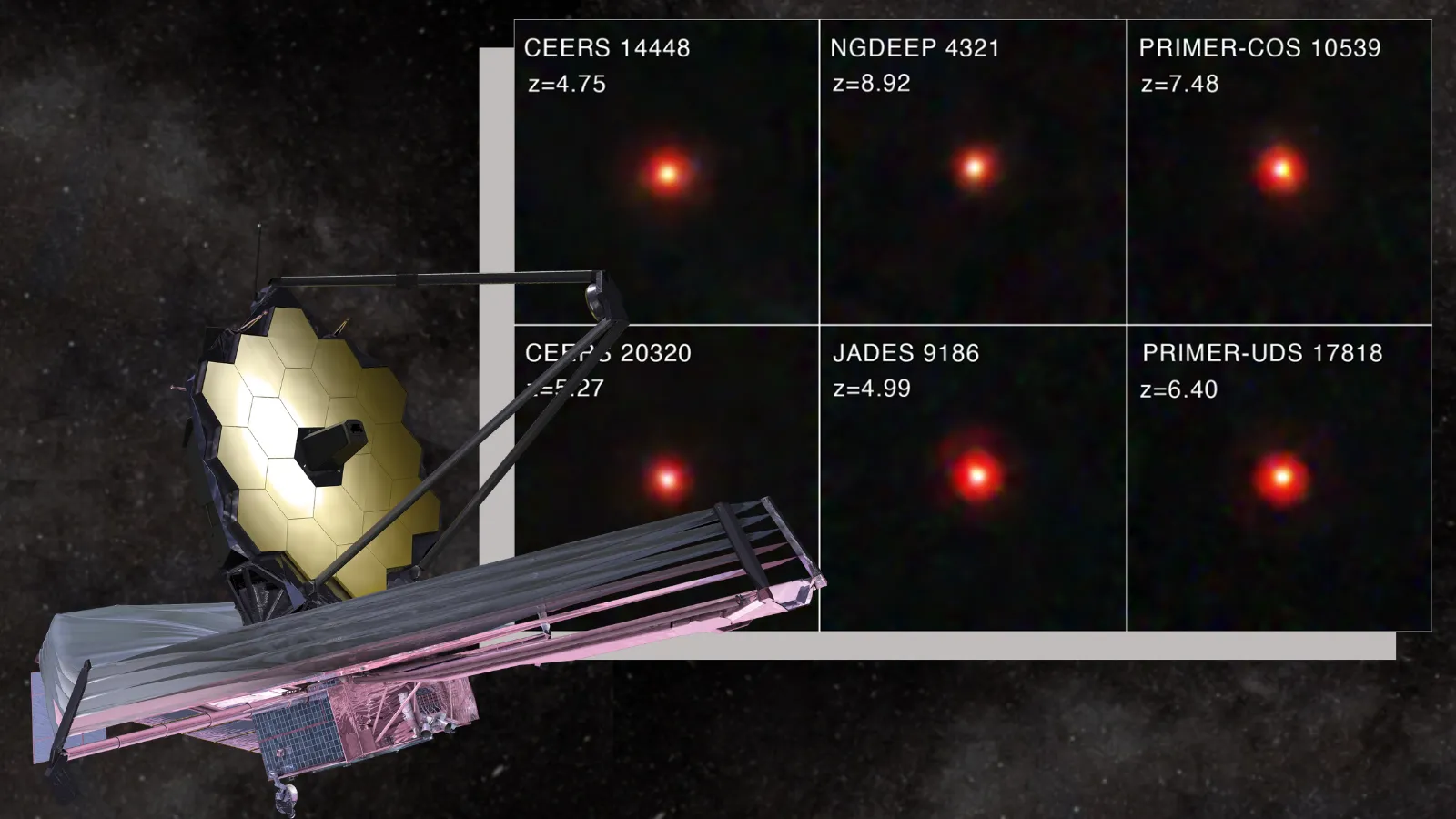
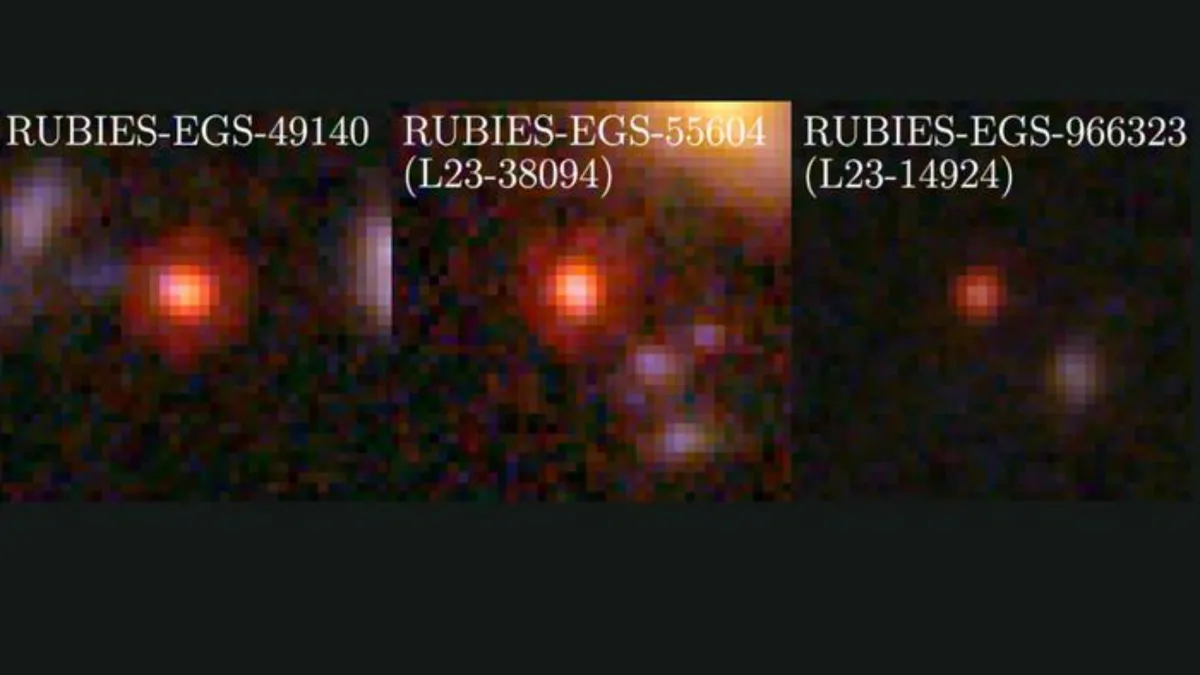
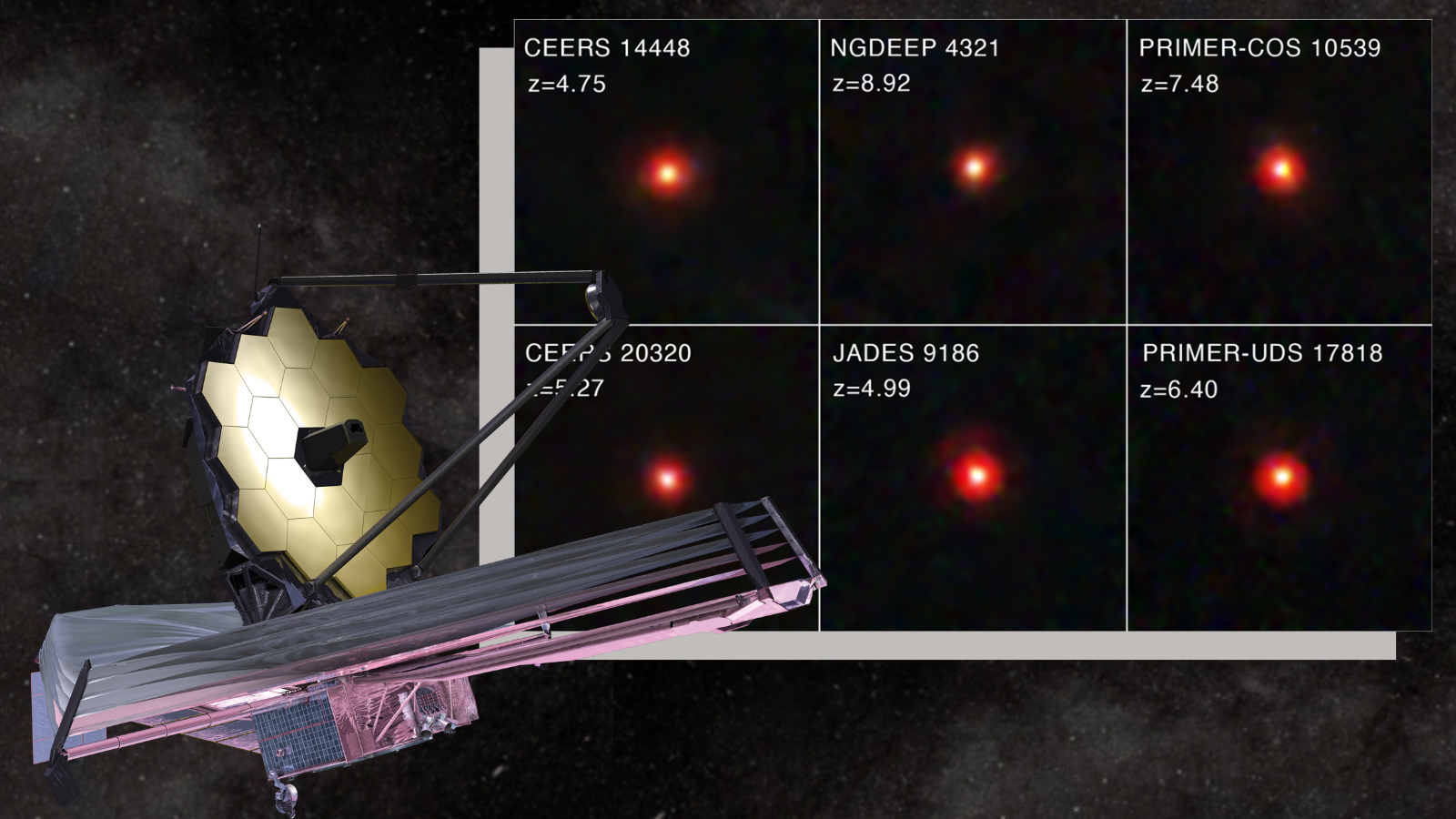
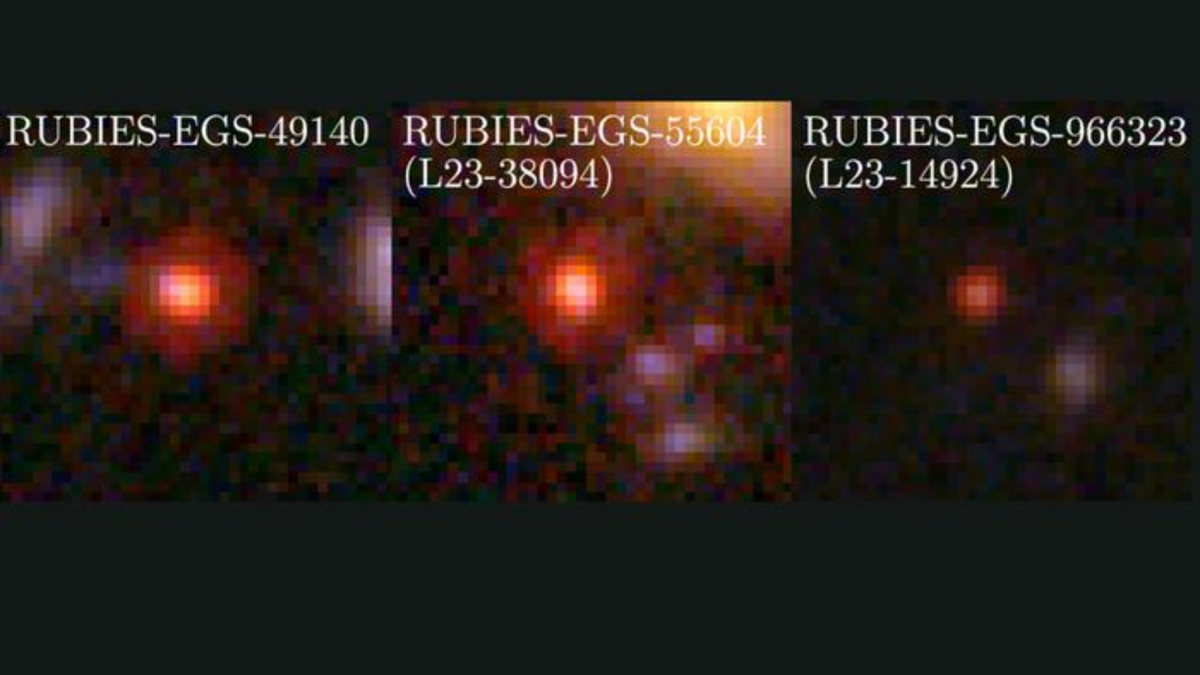
An illustration shows the JWST in space next to its observations of some of the earliest galaxies ever seen, the so-called "little red dots." (Image credit: NASA, ESA, CSA, STScI, Dale Kocevski (Colby College)/ Robert Lea (created with Canva))
The cosmos is full of surprises, and the James Webb Space Telescope seems to be a cosmic gift that keeps on giving, serving up puzzles faster than we can solve them.
One of the most intriguing, and dare I say, enigmatic populations to pop up in the James Webb Space Telescope 's (JWST) groundbreaking observations are the Little Red Dots (LRDs). These aren't just any old cosmic curiosities; they're very distant objects in the universe whose light has been stretched to longer, redder wavelengths due to the universe's expansion , meaning we're seeing them as they appeared in the early universe.
These particular LRDs are characterized by a distinct V-shaped spectrum, showing off a blue ultraviolet continuum and red optical light. Mysterious, right?…