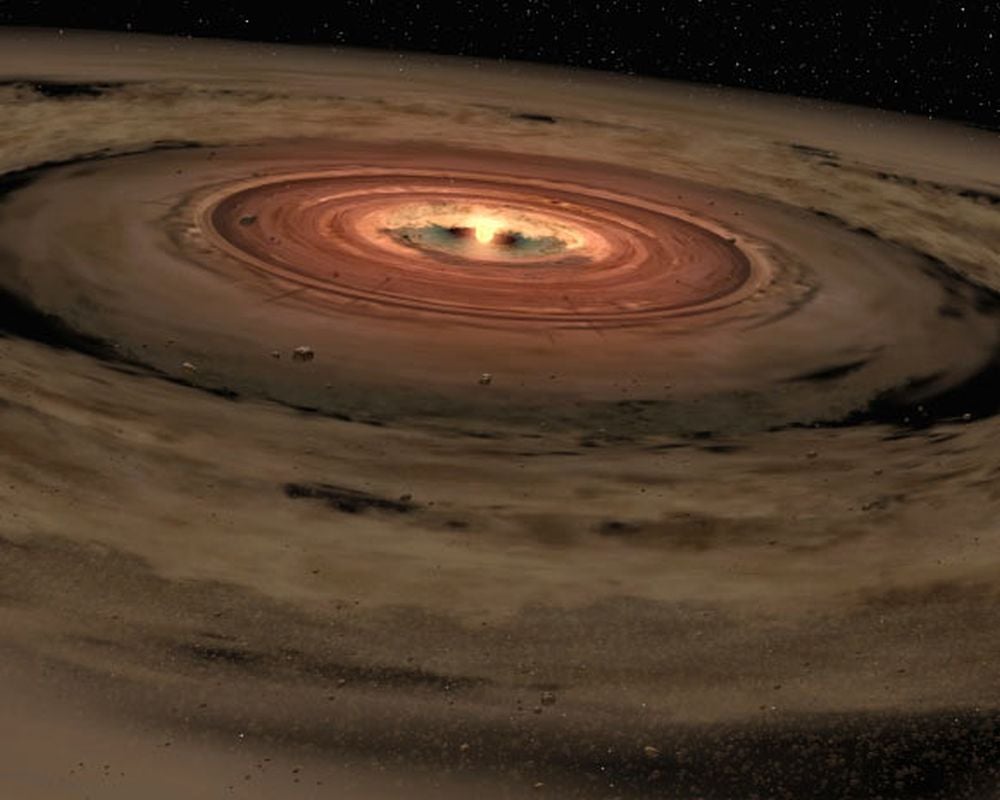
Earth's formation was a messy process. It all happened about 4.5 billion years ago, in our young chaotic Solar System. Rocky planetesimals were whizzing around in the Solar System back then, and Earth formed as more of these objects collided and merged with it.
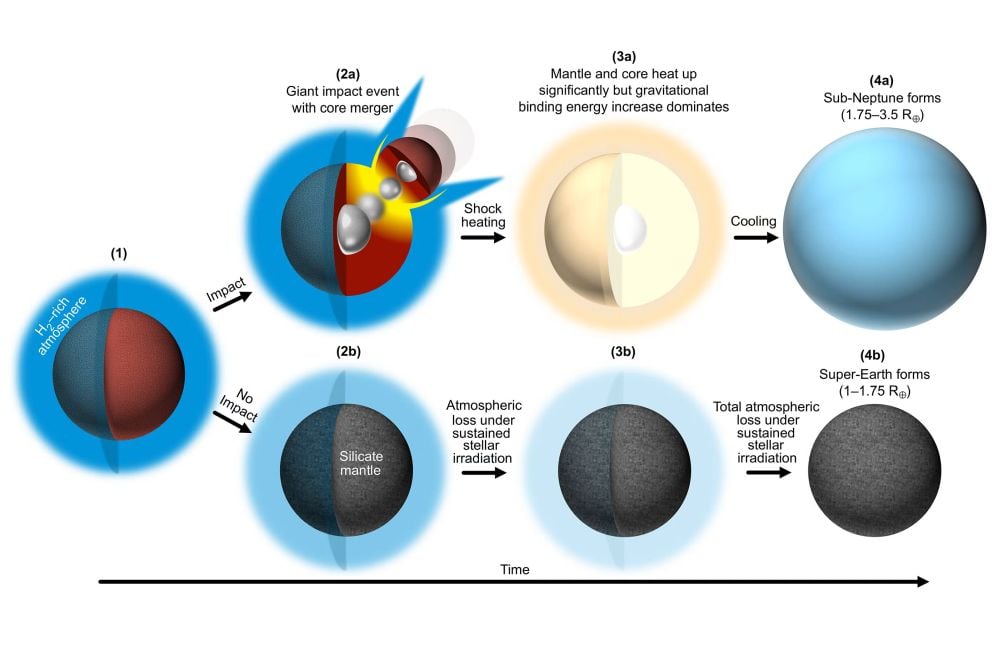
Some of these collisions were giant impacts that generated immense heat. These were common in the later stages of Earth's formation, after the protoplanetary disk had largely dissipated and atmospheric accretion was complete. Planetary scientists have wondered how young planets like Earth could've held onto their atmospheres near the end of their accretion period. The massive heat from giant impacts should've driven primordial He/H atmospheres away. But new research suggests that simple picture doesn't capture some important details, and that giant impacts could've actually helped young rocky planets retain their atmospheres.
The work is titled " Retention of primordial atmospheres through giant impacts ," and it's published in Nature Astronomy.…