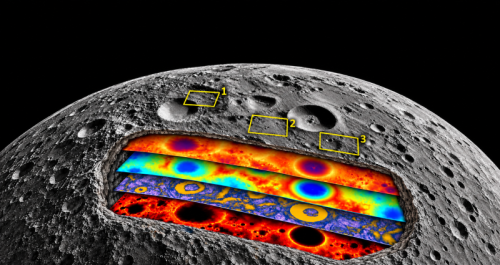
NASA plans to return astronauts to the lunar surface in 2028 for the first time since Apollo 17 in 1972. But the famed agency has no intention of stopping there, as they plan to establish a permanent human presence on the Moon through a slow and meticulous process involving power, resource extraction, and habitat technologies. However, with the soaring use of artificial intelligence (AI) in our everyday lives, how could this emerging technology be used to identify new landing sites for future outposts on the Moon and possibly Mars?
Now, a team of researchers from The Ohio State University might have contributed to how AI can be used for future space outposts. As discussed in a recent study presented at the 58th Annual Meeting of the Division for Planetary Sciences (DPS 58) of the American Astronomical Society, the researchers introduced how a novel AI model could be used to both identify safe landing sites and develop a human outpost strategy at those landing sites.…