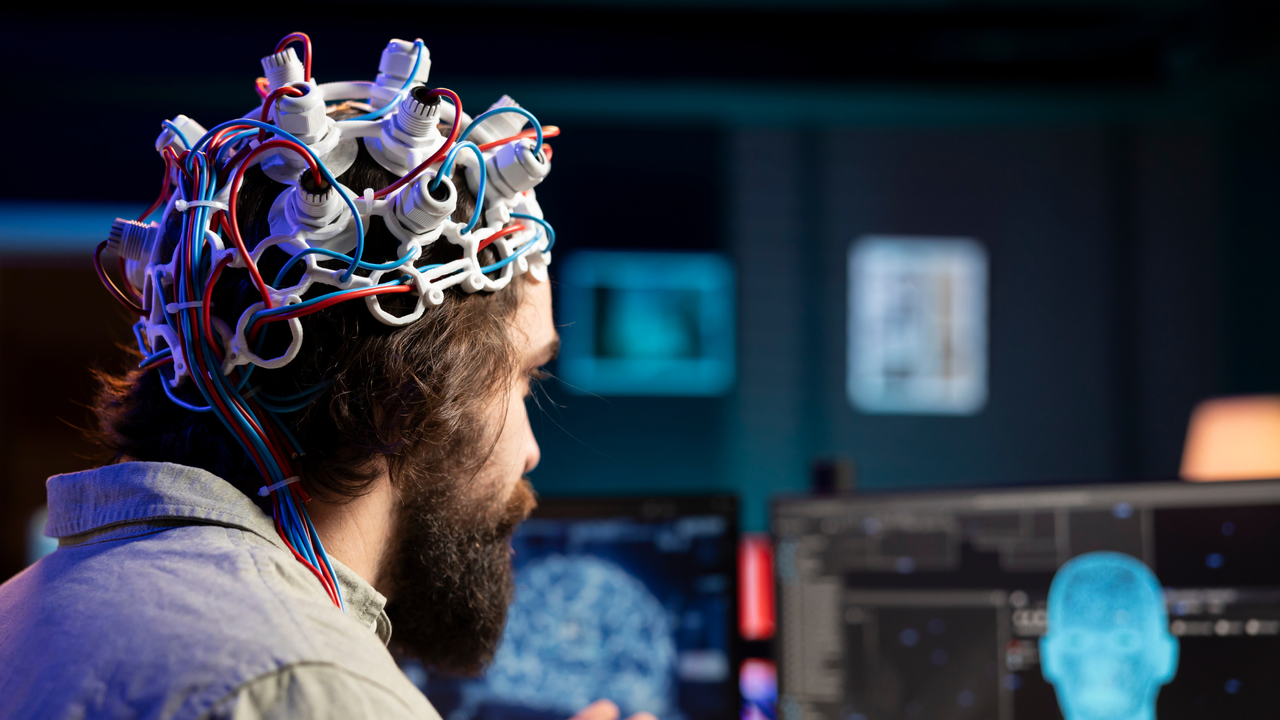
Elon Musk’s Neuralink, along with several other startups, have been experimenting with brain-computer interfaces (BCIs) for years now, allowing patients who have lost mobility to control computers using their minds alone. However, most of these require invasive surgery to install the sensor needed to detect brain signals. Meta is working to change this with its Brain2Qwerty non-invasive BCI. Instead of relying on implants, this system uses a non-invasive magnetoencephalography (MEG) scanner to read the faint changes in a brain’s magnetic fields due to brain activity and then correlate this to keypresses on a virtual keyboard.
The latest release is actually the second version of the non-invasive BCI, with the first one released last year as proof of concept. This second version has significantly increased accuracy after it was trained on ten times more data for each test subject.…