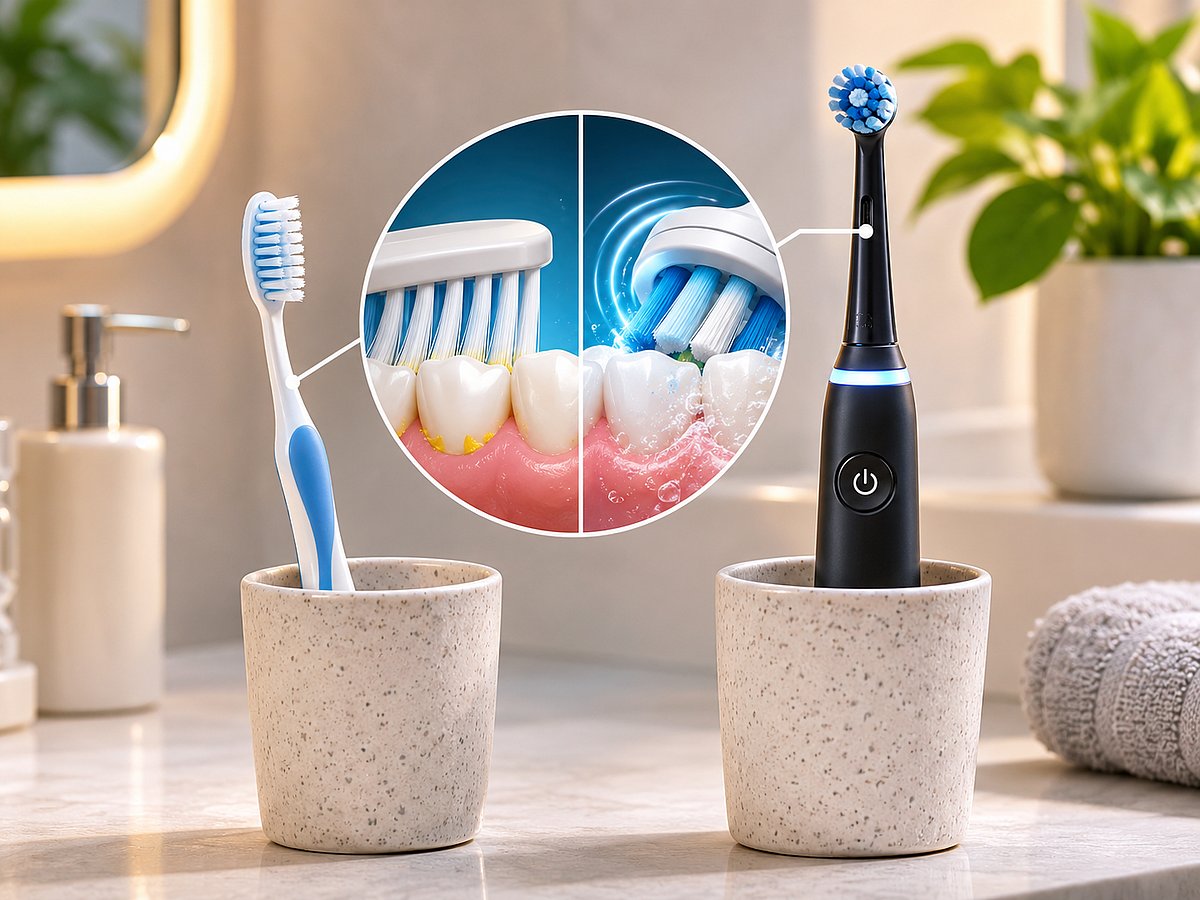
A toothbrush makes thousands of movements across your teeth every morning, but changing who does the moving can make a measurable difference. A major 2014 Cochrane review, examining 56 clinical trials involving 5,068 participants, found that powered toothbrushes reduced plaque scores by 11 per cent more than manual brushes after one to three months. Beyond three months, the relative reduction reached 21 per cent. These figures describe differences in plaque measurements, rather than a guarantee of better long-term dental health. Still, they raise an interesting possibility: the familiar two-minute brushing routine could benefit from a different kind of movement.
Why electric toothbrushes work differently
Manual toothbrushes depend on the movement, angle and pressure of your hand.…