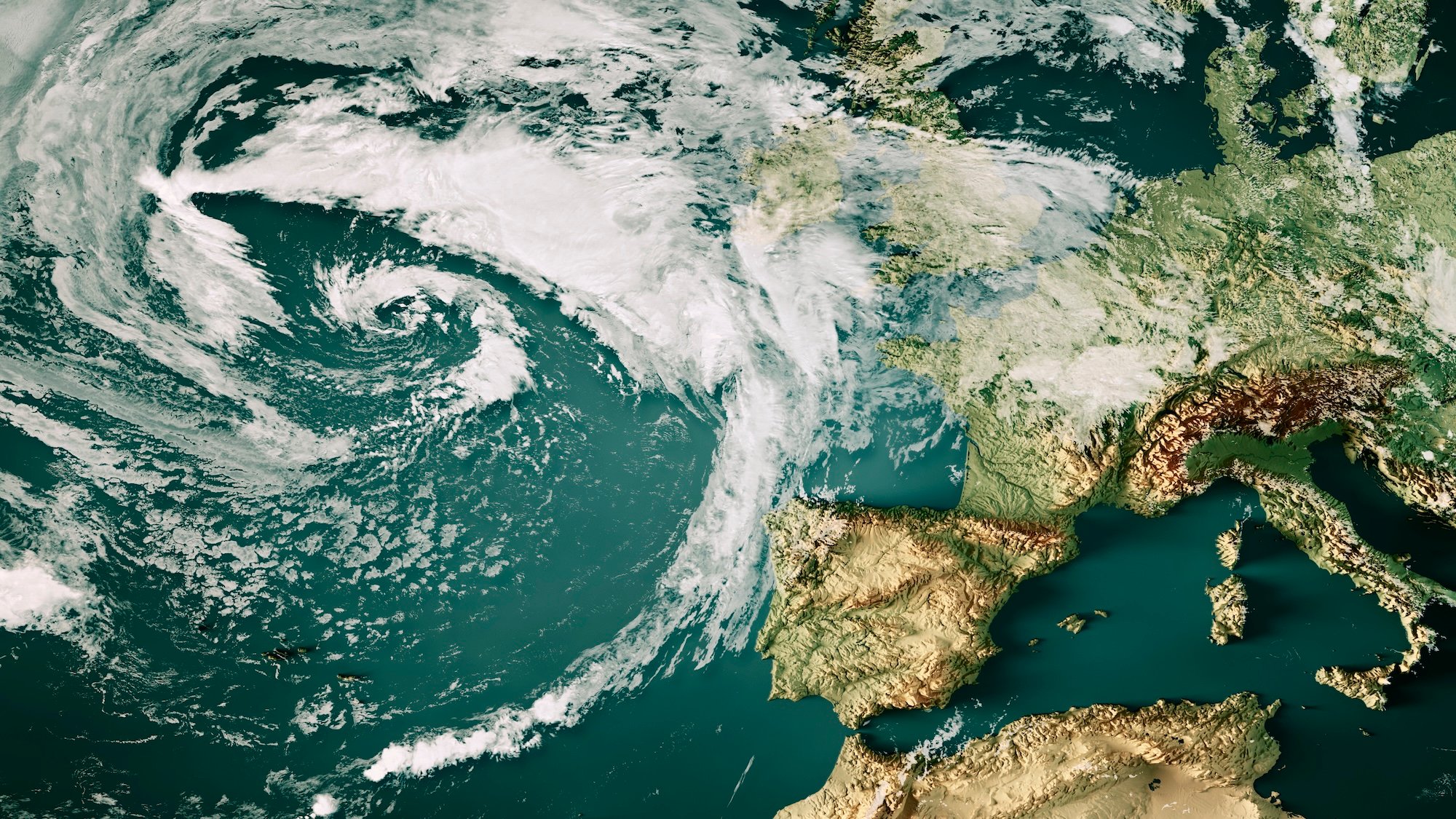
Chaos theory argues that even predictable systems can quickly overlap into unpredictable situations. A new forecasting model sidesteps some of the barriers. Credit: Frank Ramspott via Getty Images
Even after decades of meteorological advances, weather forecasting remains infamously difficult. Today’s most trusted models are rarely accurate beyond a two-week window due to a constant cascade of atmospheric and climatic variables. These unpredictable meteorological interactions are the foundations of chaos theory . The interdisciplinary field studies how even the world’s most predictable systems can still produce completely unpredictable results, and was first developed by MIT mathematician Edward Lorenz during the 1970s.
“He came up with this theoretical two-week limit where beyond that, we just can’t predict weather because the noise in the system grows so much that it overwhelms any signal you start with,” Judah Cohen , a climatologist also at MIT, explained .
According to Cohen, many climate researchers…