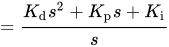
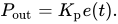
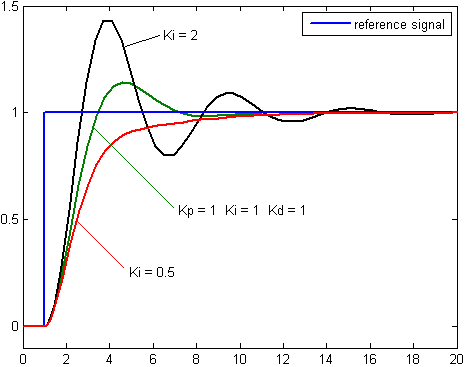
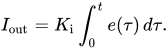
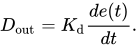
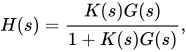
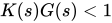
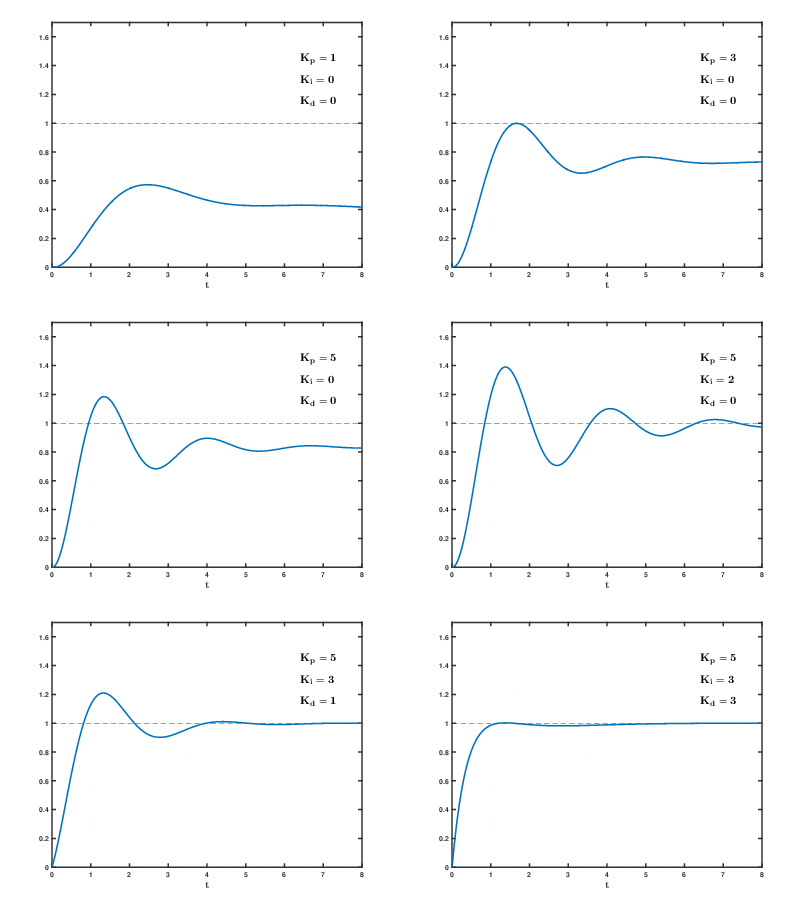
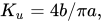
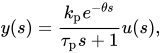
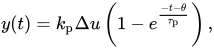
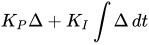
A proportional–integral–derivative ( PID ) controller , or three-term controller , is a feedback -based control loop mechanism commonly used to manage machines and processes that require continuous control and automatic adjustment. It is typically used in industrial control systems and various other applications where constant control through modulation is necessary without human intervention. The PID controller automatically compares the desired target value ( setpoint or SP) with the actual value of the system ( process variable or PV). The difference between these two values is called the error value , denoted as .
It then applies corrective actions automatically to bring the PV to the same value as the SP using three methods: The proportional ( P ) component responds to the current error value by producing an output that is directly proportional to the magnitude of the error. This provides immediate correction based on how far the system is from the desired setpoint.…