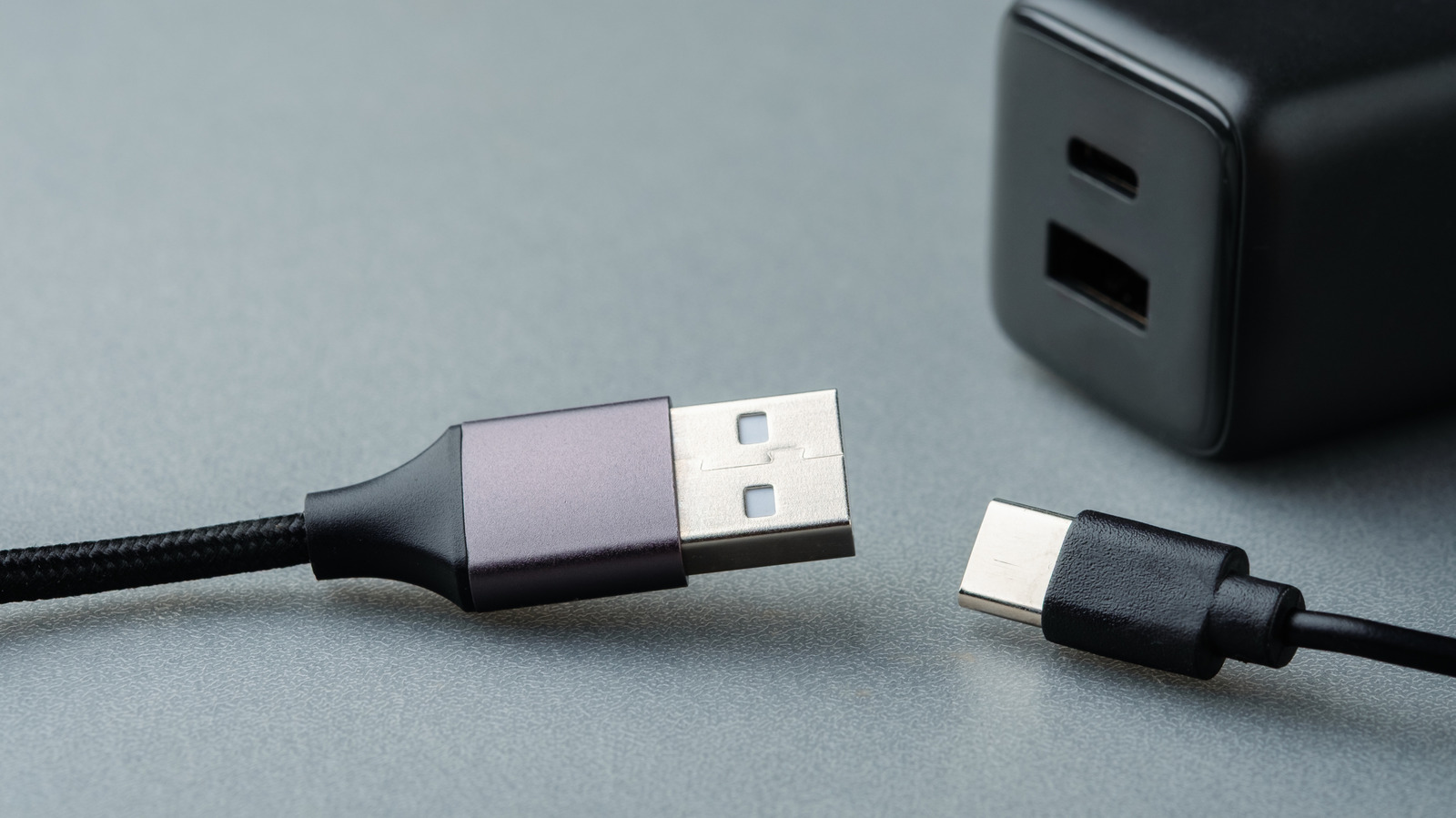
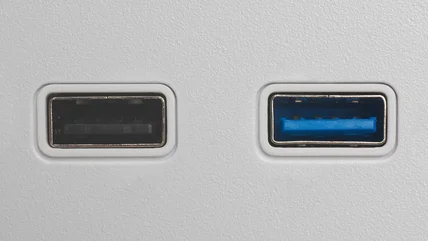
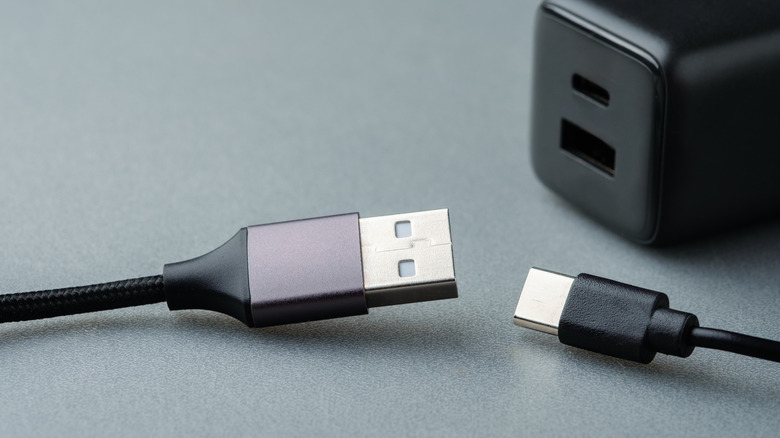
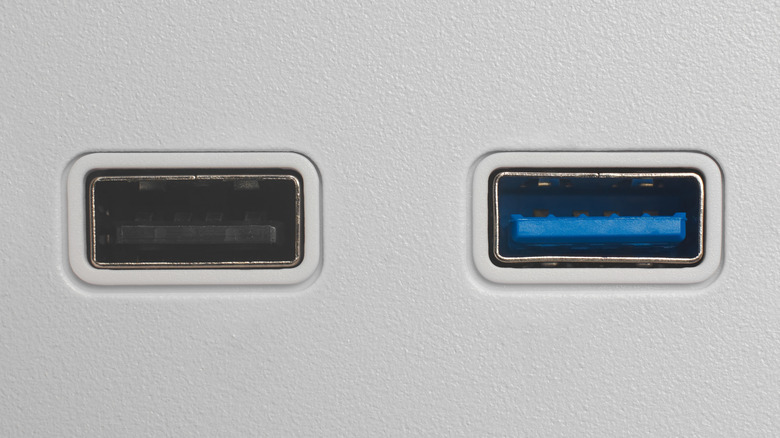
Those square holes on USB-A connectors serve an important purpose.
patpitchaya/Shutterstock
USB-C ports might be the de facto port today when it comes to charging and data transfer, but that wasn't always the case. Before consumers got the current reversible design, the original Universal Serial Bus, or USB, was designed in the late '90s by Intel, Microsoft, NEC (Nippon Electric Company), IBM, Compaq, DEC (Digital Equipment Corporation) and Nortel.
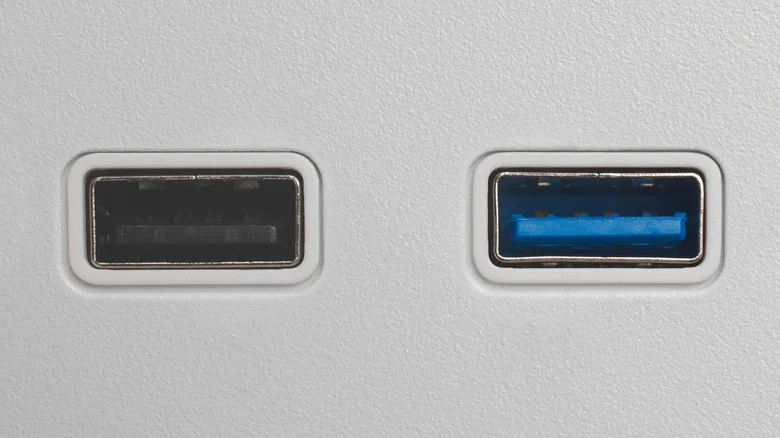
The USB Type-A connector was designed to simplify the task of interfacing with plug-and-play peripherals like keyboards and printers. Broad compatibility meant that users could minimize their cable collection and rely on a standard port for convenience. Over the years, new standards like USB 4 brought dramatic improvements in power delivery and data transfer speeds.
Most male USB-A connectors have two square-shaped holes.…