Image of the Day for November 9, 2026
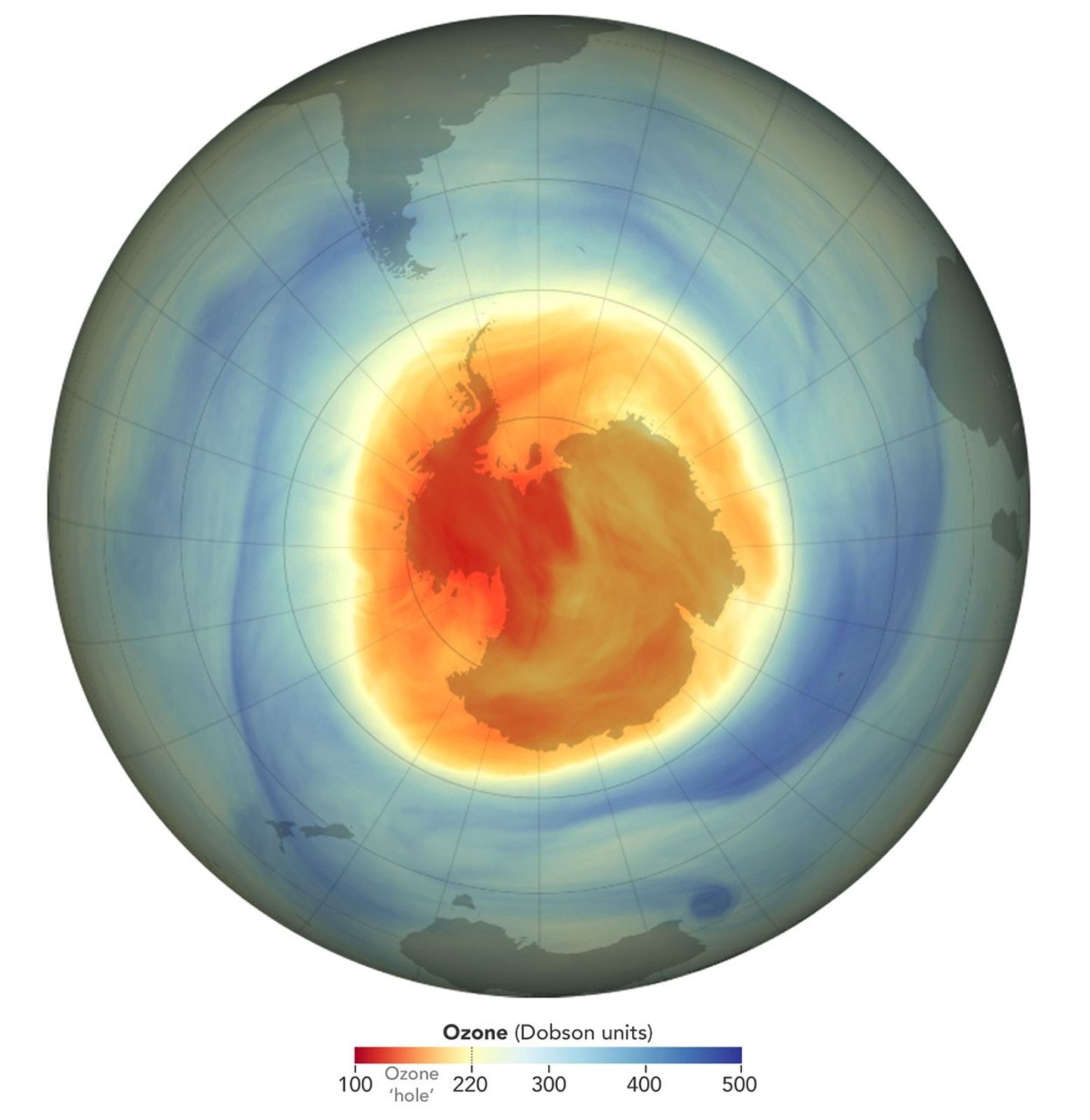
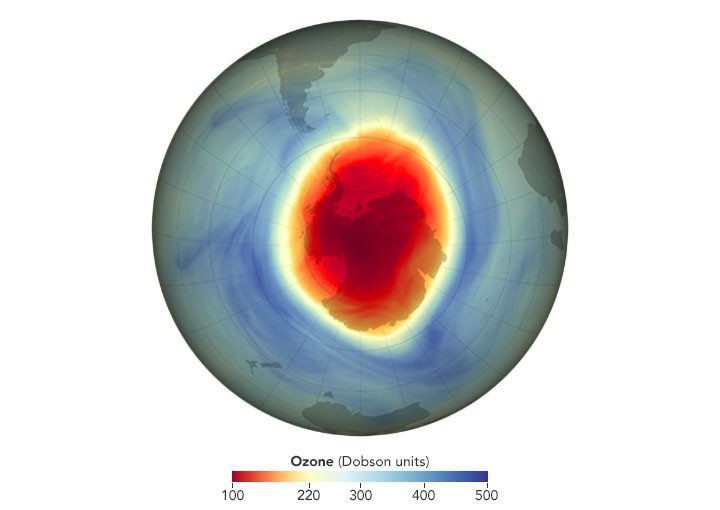
The ozone hole ranked seventh largest by area in 48 years of monitoring, but it was not as deep as other large holes on record.
Nov 09, 2026
View more Images of the Day:
This story is an update to the Antarctic ozone hole feature in our World of Change series , which documents how Earth changes over months, seasons, and years.
The stratospheric ozone layer protects life on Earth by absorbing ultraviolet light, which damages DNA in plants and animals (including humans) and leads to sunburns and skin cancer. Prior to 1979, scientists had not observed atmospheric ozone concentrations below 220 Dobson Units . But in 1985, British Antarctic Survey scientists using ground-based measurements at Halley Research Station reported that Earth’s natural sunscreen was thinning dramatically over Antarctica each spring.…