var ytInitialPlayerResponse = {"responseContext":{"serviceTrackingParams":[{"service":"GFEEDBACK","params":[{"key":"ipcc","value":"0"},{"key":"is_alc_surface","value":"false"},{"key":"is_viewed_live","value":"False"},{"key":"logged_in","value":"0"},{"key":…
Here are my thoughts on the free online textbook Is Parallel Programming Hard, And, If So, What Can You Do About It? by Paul E. McKenney, author of the Linux kernel’s RCU synchronization mechanism.…
Most durable execution systems recover by replaying retained history. TCC checkpoints the program continuation instead, so recovery need not reconstruct the present from the past.
Every language pitches async/await as synchronous-looking code, and the same two keywords appear everywhere. But behind the shared syntax hide nine independent design decisions, and no two of seven modern runtimes agree on what even the simplest async…
std.Io.Threaded is one of the implementations of Zig's new Io interface that enables concurrency. This is a boring just use threads impl. I personally find it neat though --- it does this weird thing that I wanted to do for ages, that to my knowledge no…
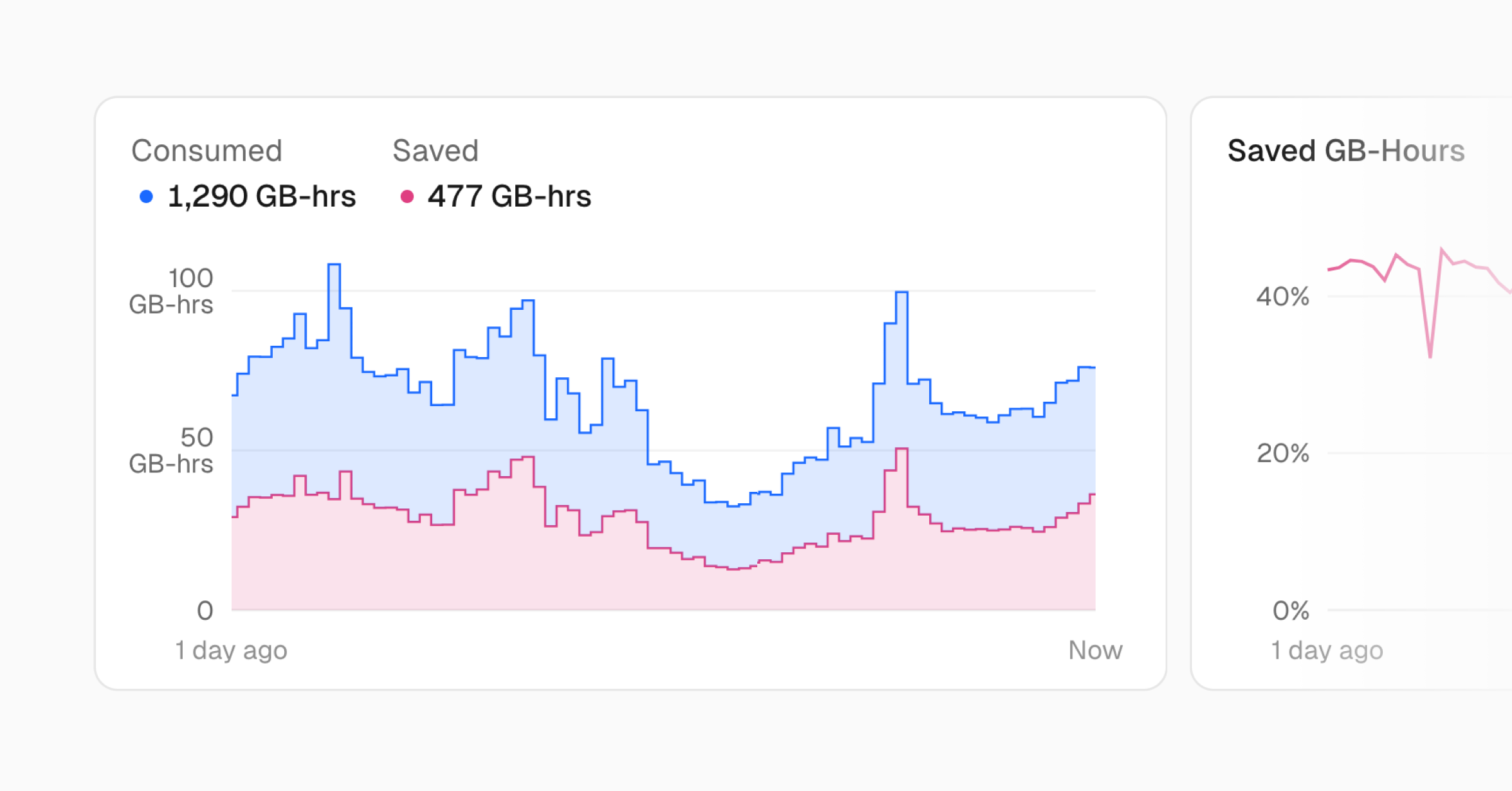
In-function concurrency is now in public beta, and allows a single function instance to handle multiple invocations concurrently, improving resource utilization by taking advantage of idle time in existing function instances.
Python functions can now leverage In-function concurrency, which optimizes function to handle multiple invocations simultaneously and improves resource efficiency.
Vercel Functions can now run on Fluid compute, a next-generation execution model that improves efficiency and reduces costs. It brings scalable, cost-effective compute without infrastructure complexity.
Fluid compute now supports both background and on-demand revalidations across all Vercel projects. This update brings the same performance and efficiency improvements to on-demand cache updates, with no configuration changes required.
Chat SDK now lets you control what happens when a new message arrives before a previous one finishes processing, with support for configurable concurrency strategies across all adapters.
![[ICFP'26] Deterministic Concurrency - YouTube](https://i.ytimg.com/vi/25x0UuSCKuU/maxresdefault.jpg)