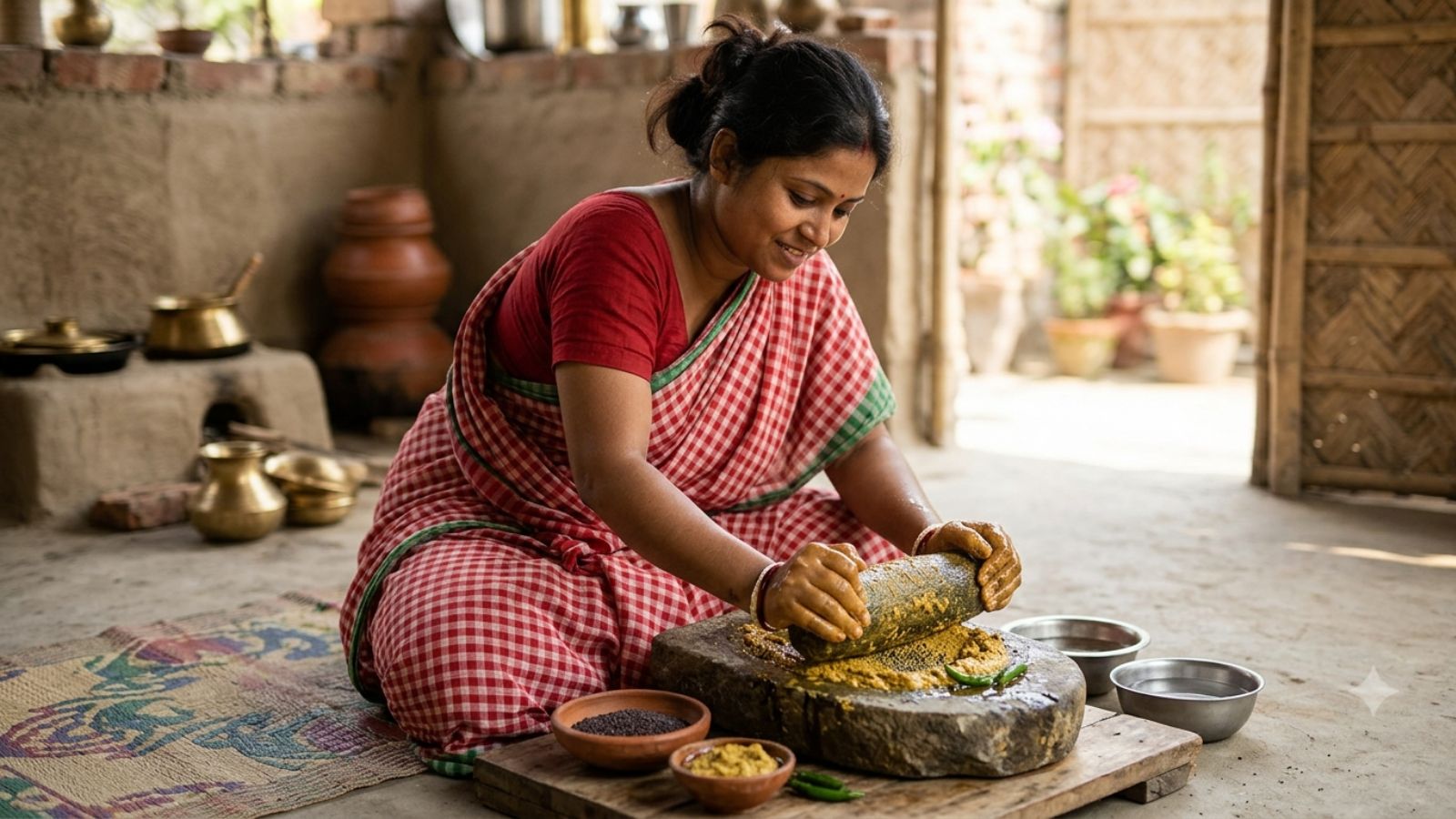
In almost every Bengali kitchen today, the mixer-grinder has become an indispensable companion. It saves time, reduces effort, and makes cooking far more convenient. Whether we need to grind spices, prepare mustard paste for shorshe ilish , make posto bata for aloo posto , or grind dal for delicious dal bora , the mixie seems to offer a quick solution to everything.
Yet there is something remarkable about the taste of food prepared with a traditional shil nora (the flat grinding stone and its hand-held roller).
DISCLAIMER: This article is based on information from the public domain and/or the experts we spoke to.
Rukma Dakshy, cookery columnist and author, says, “The mustard paste tastes sharper and more rounded, the posto has a beautiful creamy texture, the dal bora turns out wonderfully soft inside, and a simple Bengali bhorta seems to acquire a depth of flavour that is difficult to reproduce with a machine.”
What is the reason behind this?
Is it merely nostalgia, or is there a scientific reason…