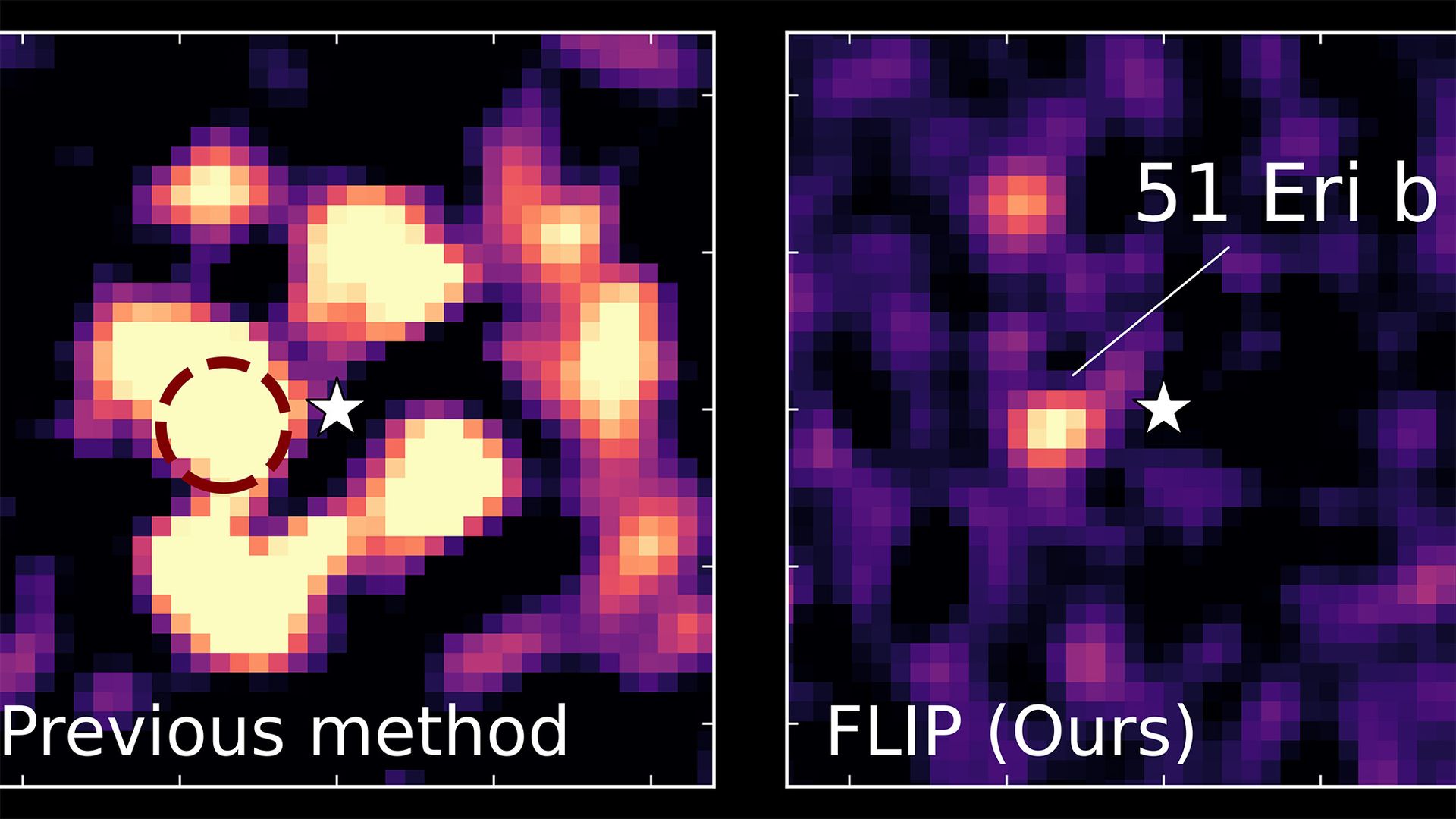
When it comes to spotting planets orbiting distant stars, the biggest hurdle is often separating the signal from the noise — specifically, trying to distinguish a planet from the stellar glare around it. That's true even for the most sophisticated telescopes, including the James Webb Space Telescope (JWST).
Now, astronomers have developed a new way to spot planets that were formerly drowned out in a sea of light. Using a combination of modeling and machine learning techniques, they picked out a previously hidden giant exoplanet in data from JWST. The results were published Nov. 4 in the journal Nature.
Get the world’s most fascinating discoveries delivered straight to your inbox.