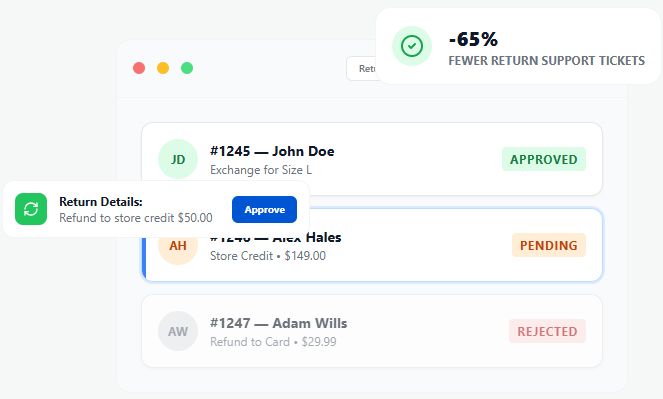
Pick a recent return and walk through the whole process, starting from the customer’s first message all the way to the refund. Now, compare that experience to your official, written policy. If they don’t line up, the real issue isn’t with your policy — and just updating the policy page won’t solve it.
Policy drift is something most growing merchants experience. Maybe you wrote rules that worked fine when things were smaller, but as your business evolves, your team starts creating workarounds. Before you know it, your website’s policy page no longer matches what’s really happening.
Start by examining how your returns work today and deciding what needs to change.
Some return policies are too strict. For example, a short, 7-day return window, coupled with a requirement that items are unopened, certainly lowers risk for you, but may put off potential customers.
Return policies can also overpromise and hurt the business.…