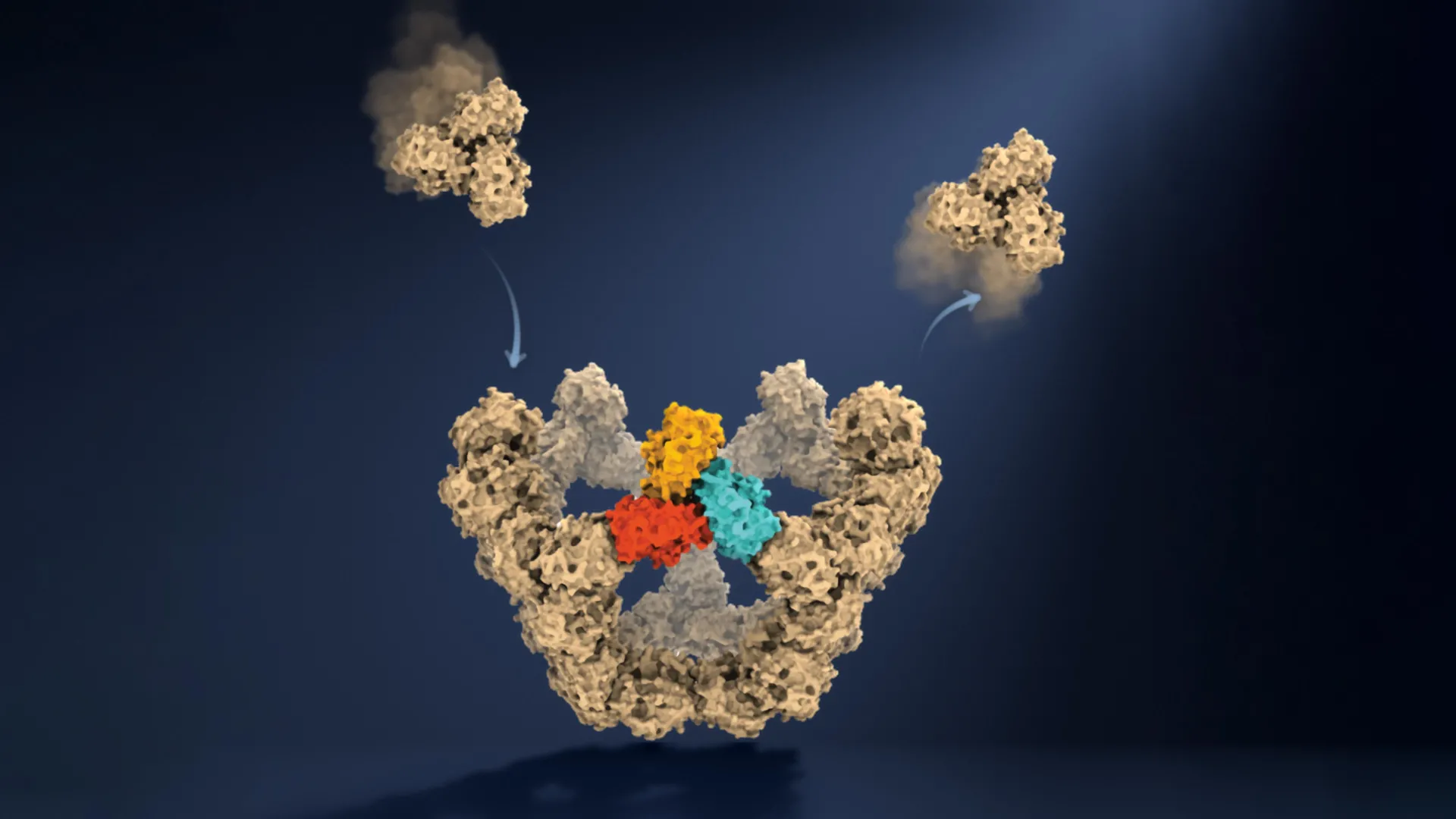
Researchers at the University of Oxford have observed virus-like particles assembling themselves one molecule at a time, uncovering the surprisingly simple rules that allow complex biological structures to form with remarkable reliability. The findings, published in Nature , offer a detailed look at a process that scientists have struggled to observe directly for decades.
Understanding how viruses construct their protective protein shells, and how that construction might be interrupted, could lead to new antiviral drugs, improved vaccines, and other medical treatments. The discovery helps explain how individual proteins consistently organize themselves into the correct structures despite having thousands of possible ways to connect.
The researchers found that viral assembly resembles navigating a complicated maze, where only certain paths lead to lasting progress. At first, protein components form weak connections that can easily break apart if the arrangement is unsuccessful.…