NEWS AND VIEWS
28 October 2026
Fresh water in deserts often points to sites with signs of early humans and stone tools. But, in Arabia’s Rub’ al Khali region, water alone does not predict occupation.
By
Emanuele Cancellieri Emanuele Cancellieri is at the Interdisciplinary Center for Archaeology and the Evolution of Human Behaviour (ICArEHB), Universidade do Algarve, 8005-139 Faro, Portugal.
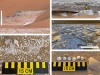
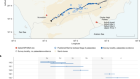
Climate and freshwater availability strongly shape expectations about past human dispersal and occupation across regions that are now deserts. Writing in Nature , Dellmour et al. 1 examine this idea by studying the Rub’ al Khali (which translates to the Empty Quarter), an almost uninhabited sand desert in the southern Arabian Peninsula.
doi: https://doi.org/10.1038/d41586-026-03263-0
References
Dellmour, R. W. et al. Nature https://doi.org/10.1038/s41586-026-11180-5 (2026).
Article Google Scholar
Matter, A. et al. Quat. Int. 382 , 120–131 (2015).
Article Google Scholar
Rose, J. I. et al.…