A new study identifies the transitional point in the solar cycle when orbital decay accelerates — giving satellite operators and debris trackers a clearer picture.
| Published: May 15, 2026
Hundreds of debris fragments float in orbit in this composite of 250 photographs of real debris created for the European Space Agency's "Our Fragile Space" exhibit. A new study finds that as the Sun approaches solar maximum, these objects lose altitude faster — a finding that could help operators prioritize which debris poses the greatest near-term collision risk. Credit: Max Alexander/Steve Kelly/ESA
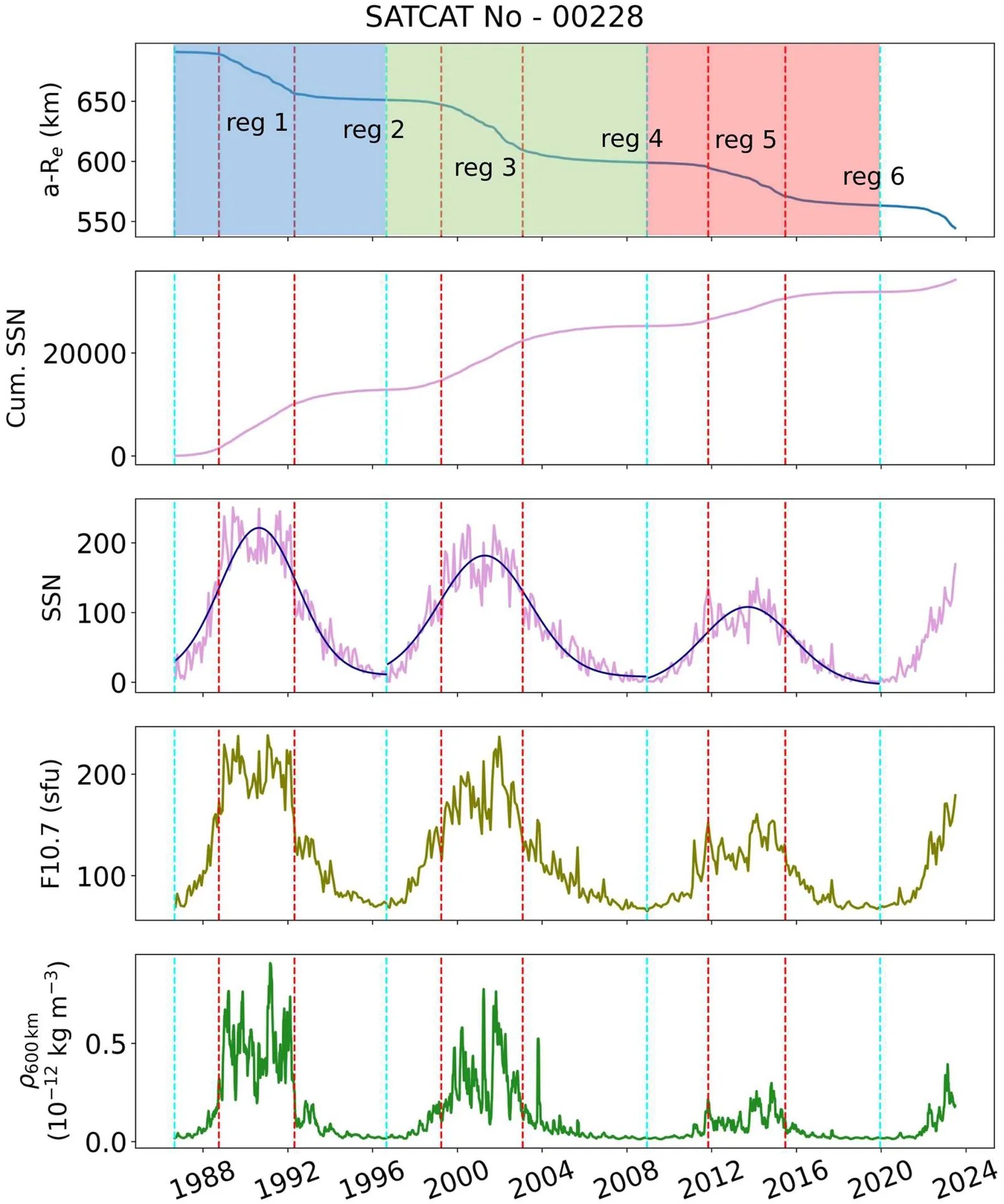
When the Sun reaches higher levels of activity, junk drifting in low Earth orbit loses altitude at an increased rate — and for the first time, scientists have measured that increase and identified when it kicks in.
A study published May 6 in Frontiers in Astronomy and Space Sciences tracked 17 pieces of space debris over 36 years of publicly available orbital data spanning three complete solar cycles, finding that decay…