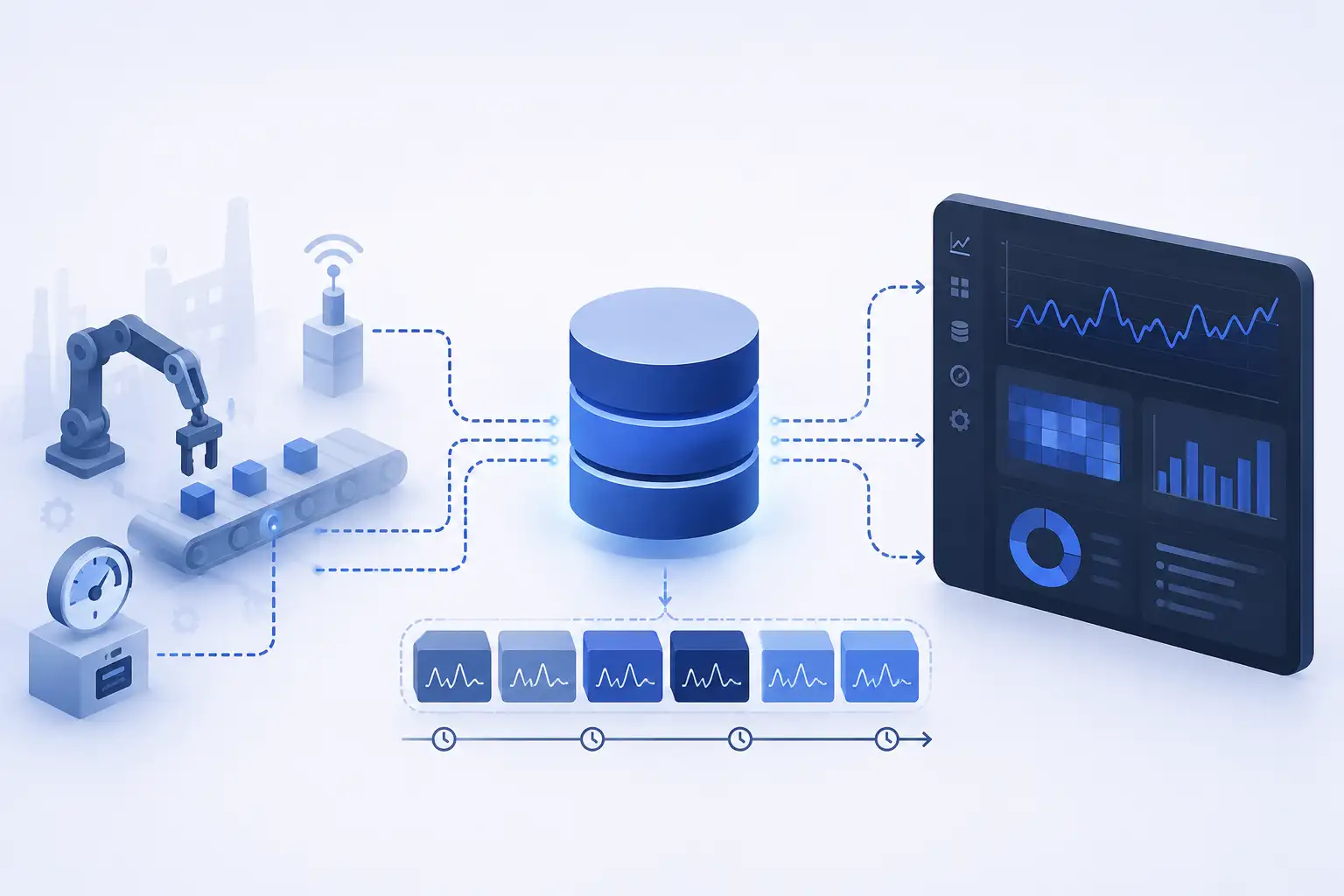
TimescaleDB can achieve compression of up to 98% for typical time-series data. Compressing time-series data requires a fundamentally different approach than the general-purpose algorithms used in OLTP databases. In TimescaleDB this is handled by the hypercore engine — a hybrid row-columnar engine that uses specialized algorithms: delta encoding, delta-of-delta, Gorilla XOR and run-length encoding. This article explains how it works and how to configure compression so that you actually achieve that ratio.
TimescaleDB compression - how it differs from PostgreSQL TOAST
PostgreSQL has a built-in mechanism called TOAST (The Oversized-Attribute Storage Technique), but TimescaleDB compression solves a fundamentally different problem. TOAST deals with individual large values (long strings, jsonb, bytea), whereas TimescaleDB compression optimizes cross-row patterns in time-series data. The two mechanisms are complementary, not competing — TimescaleDB even uses TOAST internally as a fallback for certain data types.…