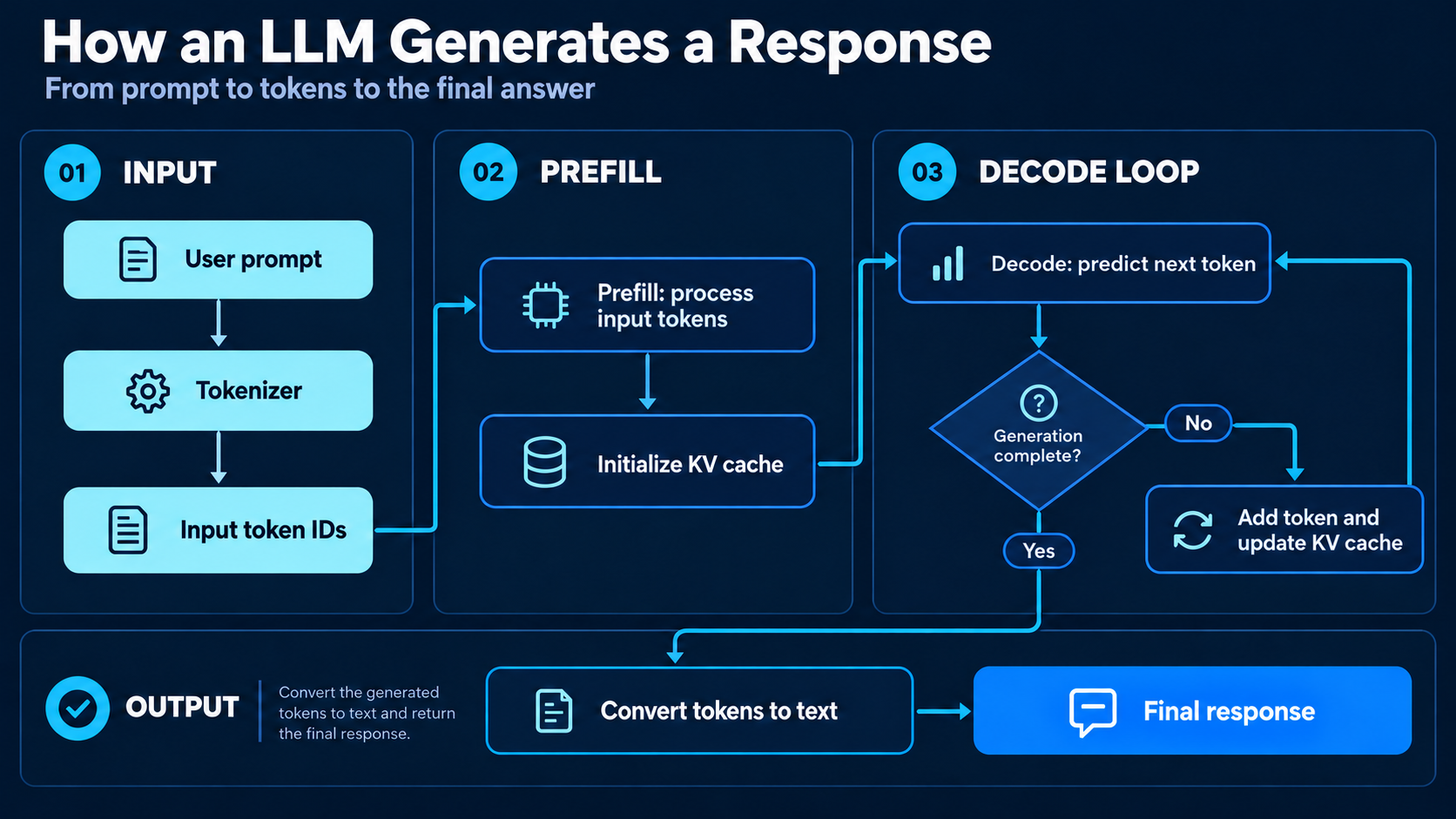
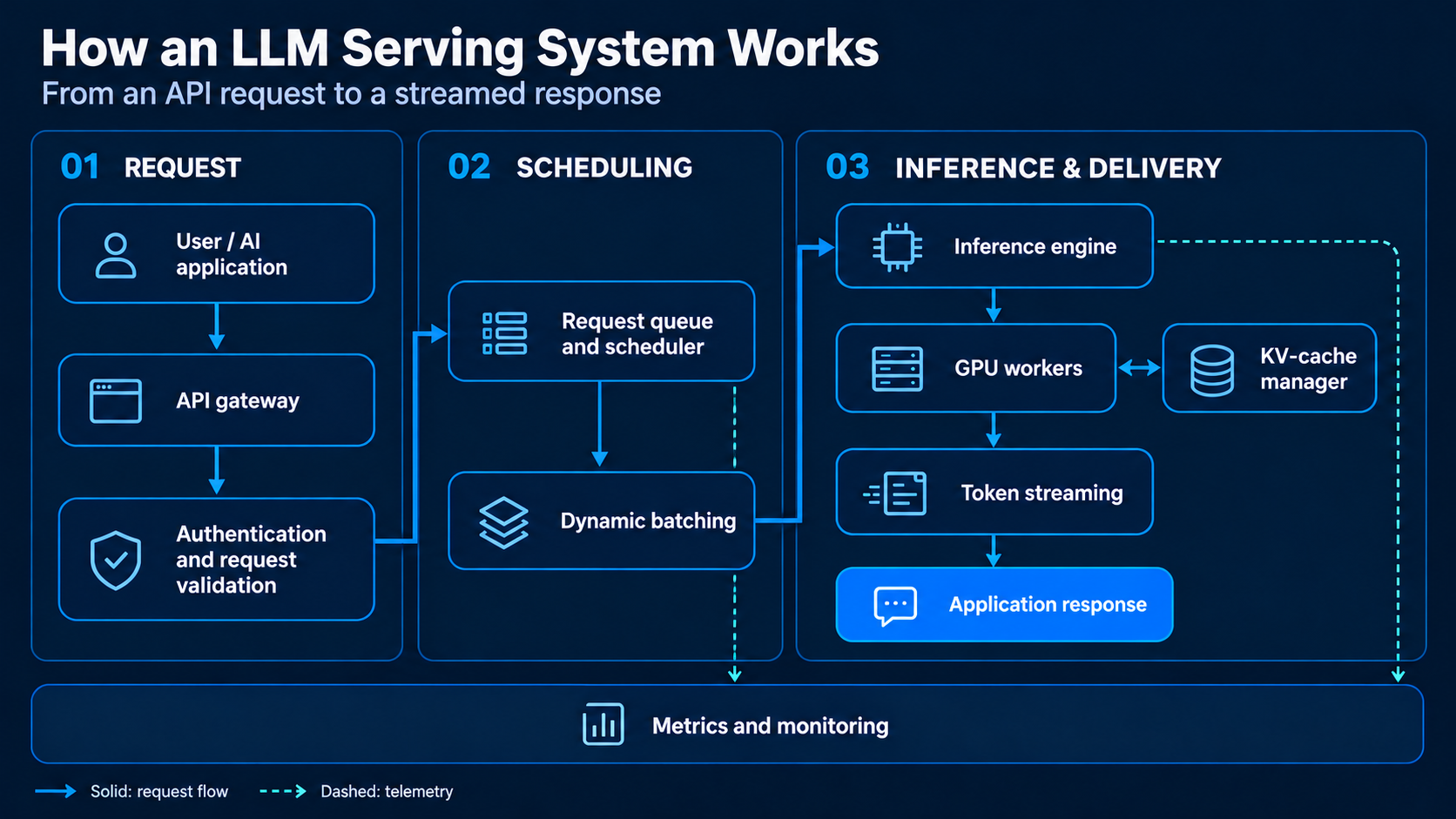
You type a question into ChatGPT or Claude. For a split second, nothing happens. Then the answer starts flowing, word by word. That brief pause and the steady stream that follows are two very different jobs happening on a GPU. Understanding them is the key to building AI apps that feel instant, serve thousands of users, and stay affordable to run. This process is called LLM inference. In this article, we’ll break down how it works, where it slows down, how engines like vLLM speed it up, and then build a hands-on lab to measure it on your own machine.
Table of contents
What is LLM Inference?
How Does LLM Inference Work?
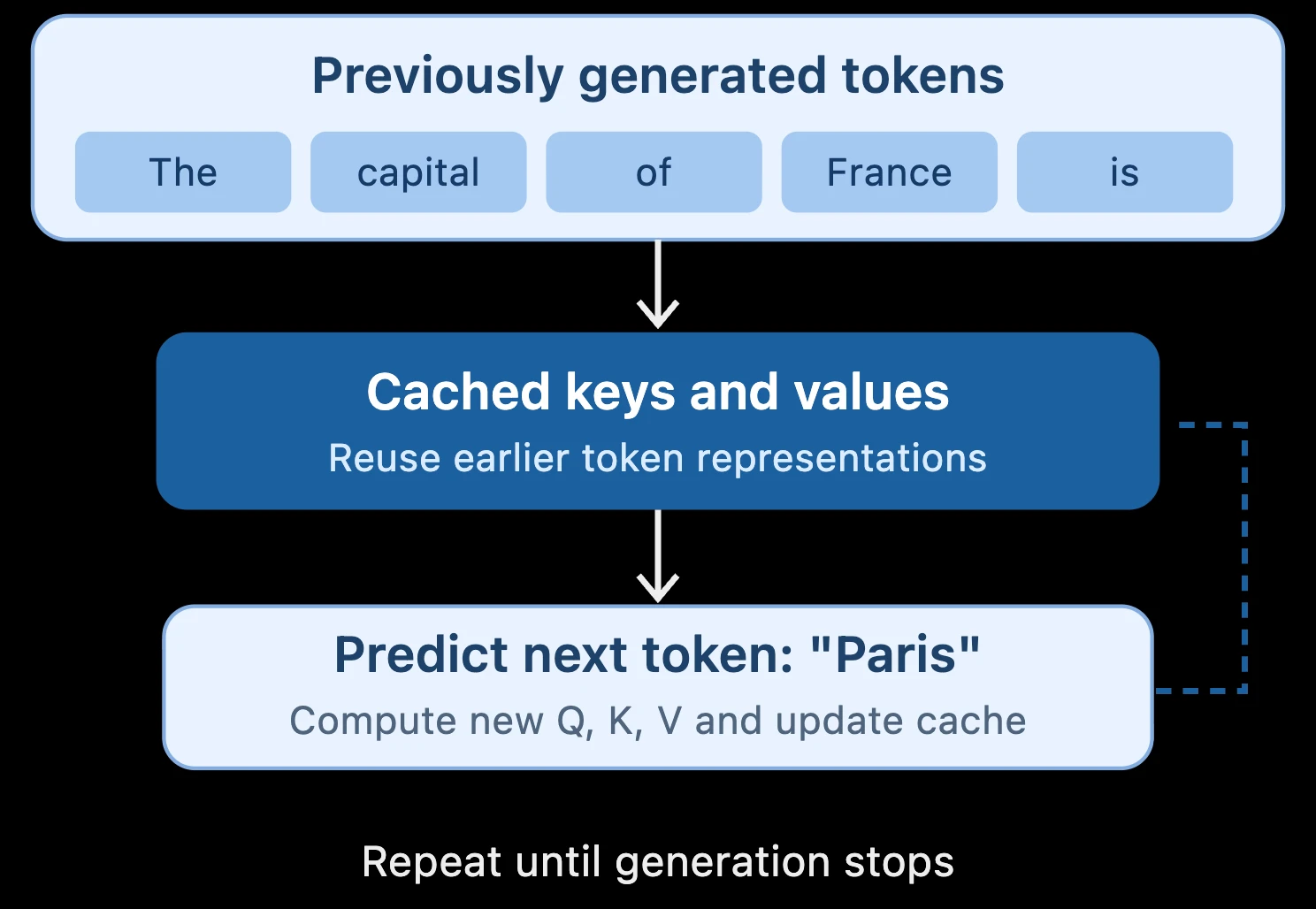
How Do LLMs Remember Previous Tokens?
Why is LLM Inference Slow?
Key Metrics Used to Measure Inference Performance
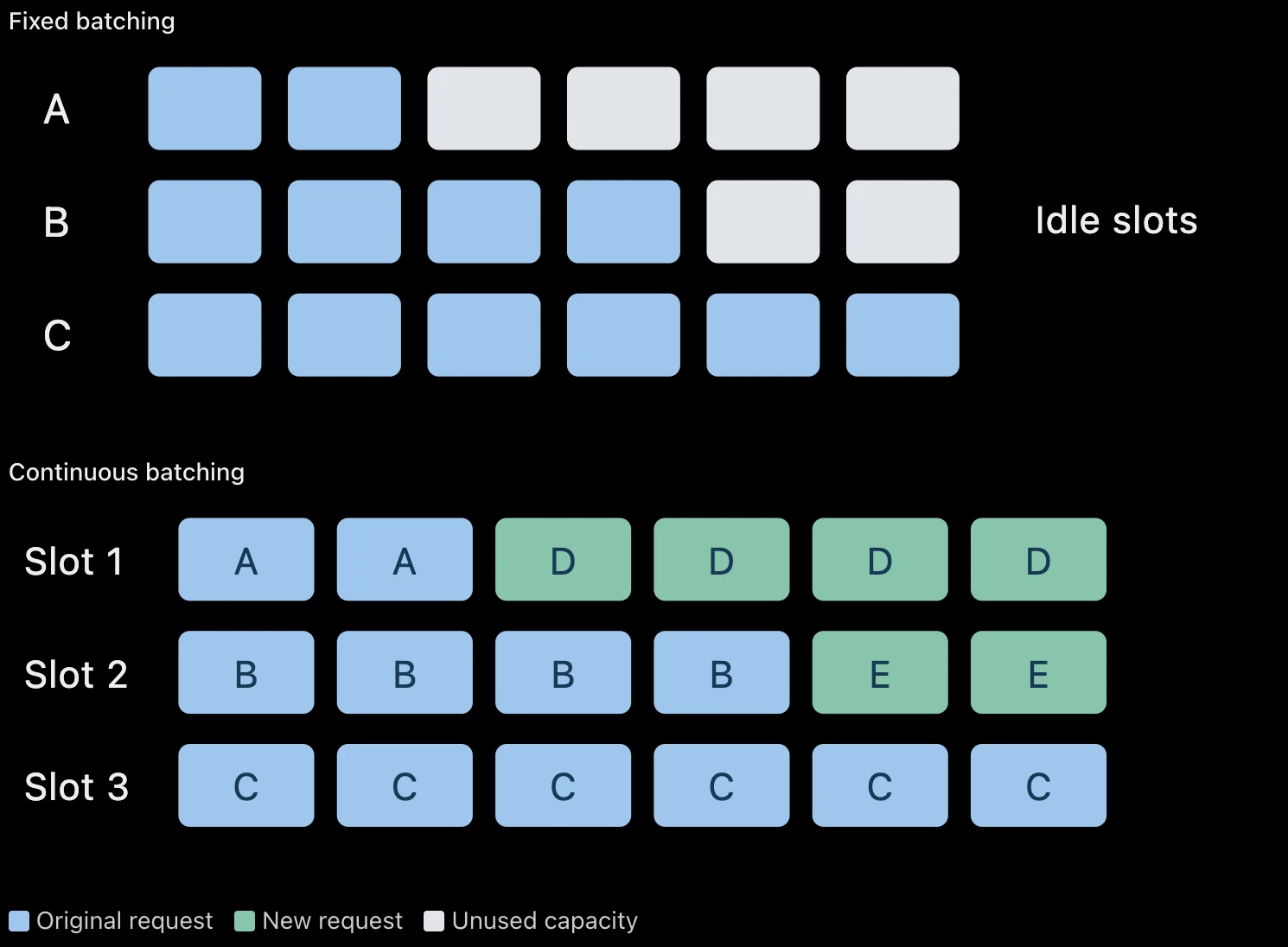
How Can We Optimize LLM Inference?
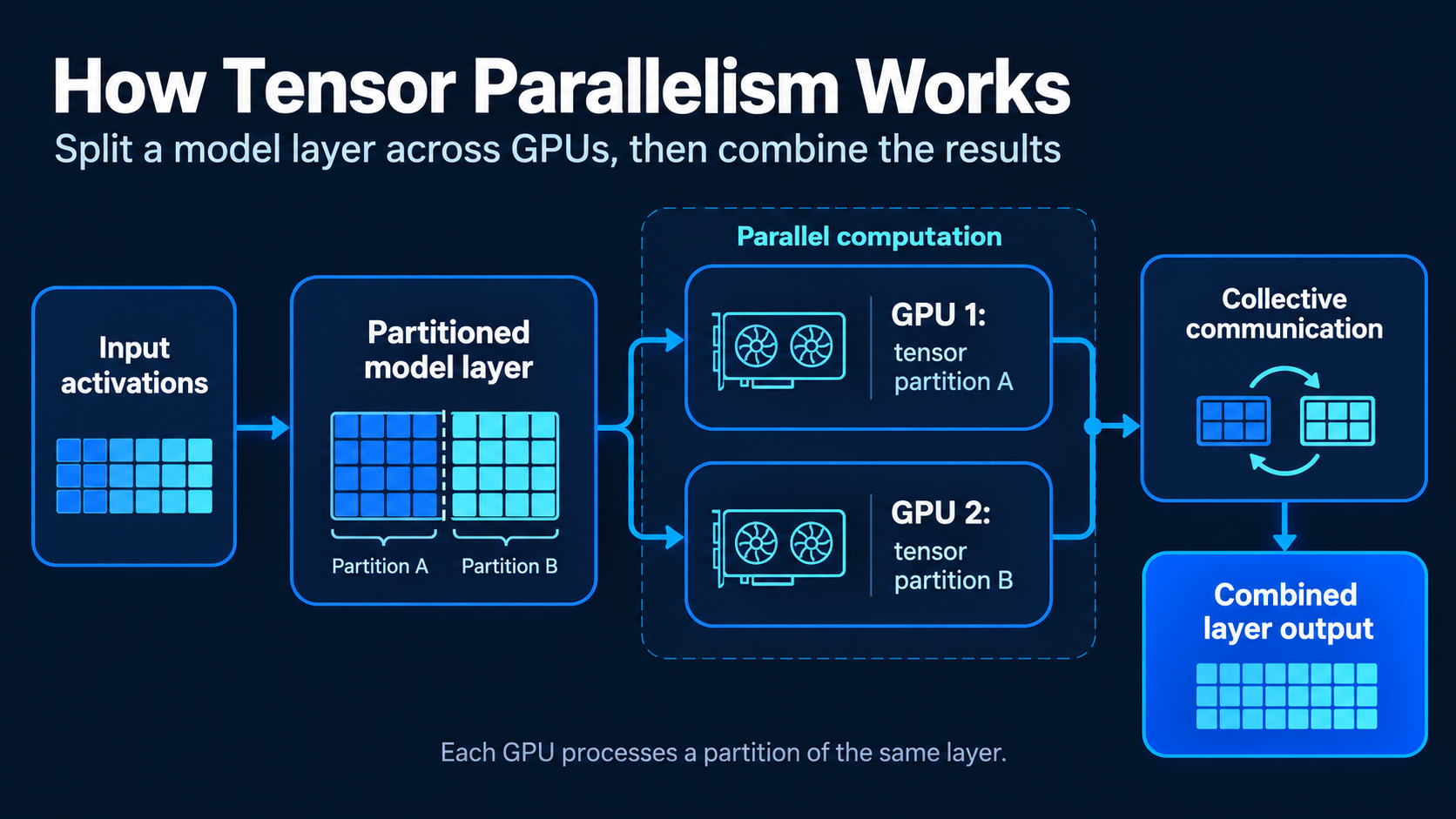
What Hardware is Needed for LLM Inference?
Popular LLM Inference Engines
Hands-On: Build an LLM Inference Performance Lab
What Does a Production LLM Inference Architecture Look Like?
Best Practices for Production…