Key takeaways
Whether an application actively runs a model, connects to external AI services, feeds data to pipelines, or supplies core infrastructure, virtually every app is part of an AI system.
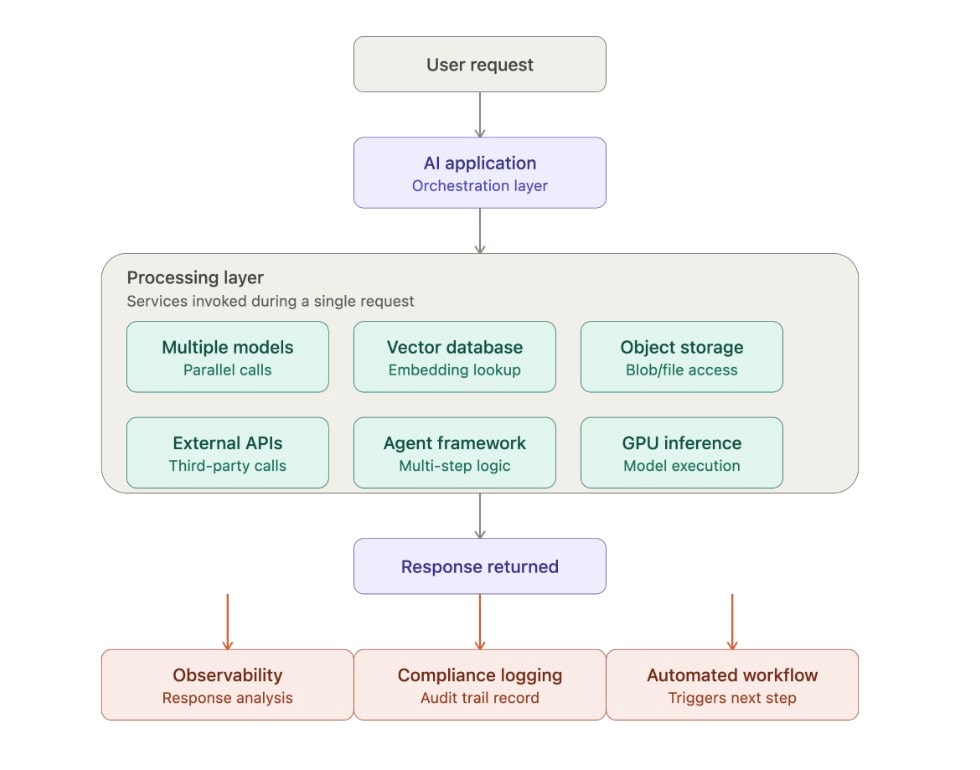
User requests now require complex, multistep pipelines that involve specialized compute (GPUs vs. CPUs), multi-tiered storage (vector databases and object storage), and low-latency networking to meet response targets of less than 500 milliseconds.
As inference expands to account for roughly two-thirds of all AI compute, real-time model execution — rather than one-off model training — is becoming the core driver of distributed system performance.
Because AI pipelines cross multiple locations and regulatory boundaries, data gravity forces models and infrastructure to move to where data legally and practically resides — not the other way around.
Modern AI apps rely on continuous data movement, rendering traditional, single-cloud pricing models obsolete.…