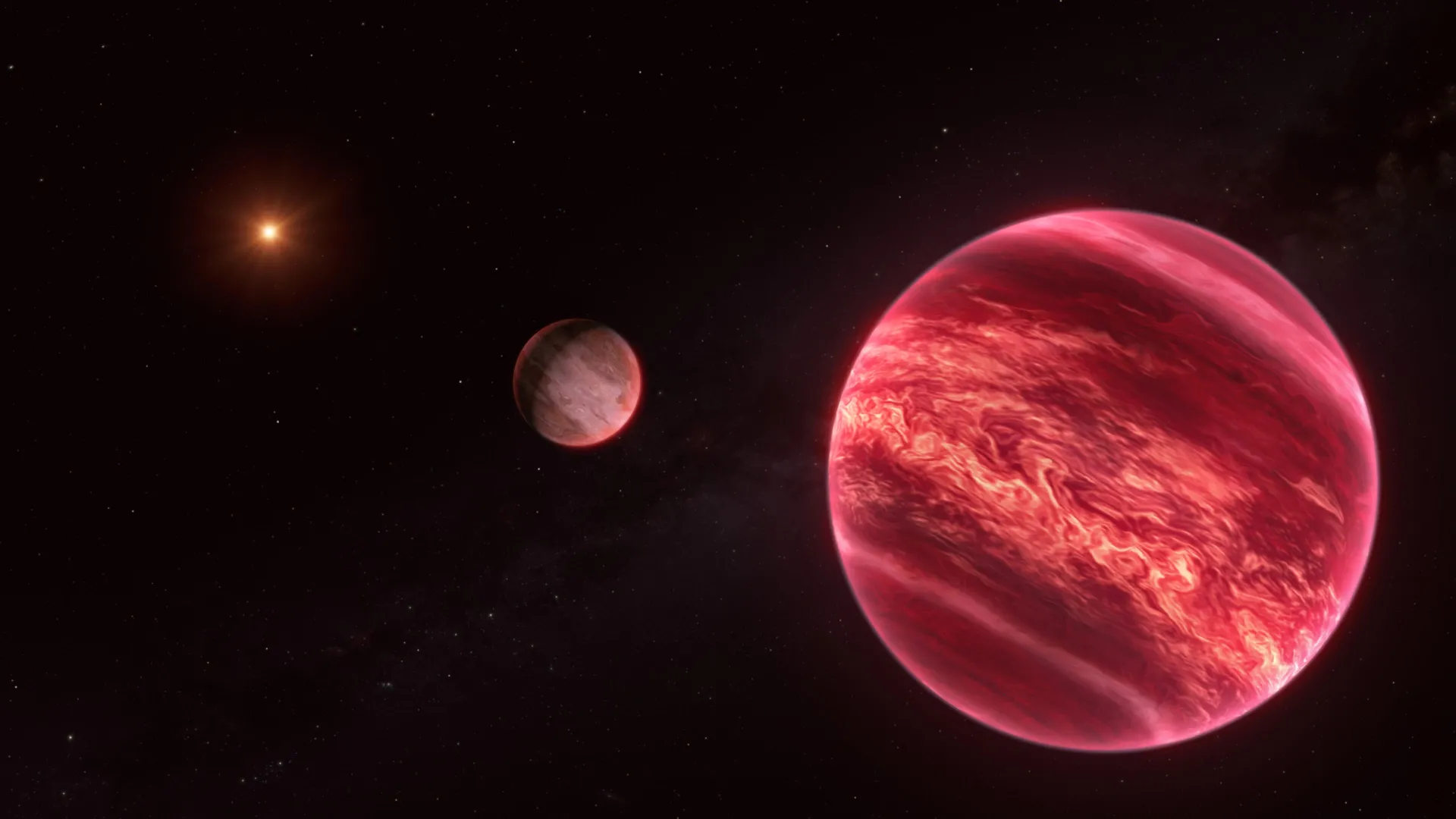
Astronomers may have found the first moon beyond our Solar System, but the mysterious object is unlike any moon we know. Observations from the European Southern Observatory's Very Large Telescope (ESO's VLT) have uncovered evidence of an enormous moon-like body in the CD-35 2722 star system. Rather than orbiting a planet, this unusual object circles a brown dwarf, a celestial body more massive than a planet but not massive enough to become a star.
If confirmed, the discovery could mark the first detection of a natural satellite outside our Solar System, potentially changing how astronomers define moons and planets.
A Bizarre Star System Unlike Our Own
Kevin Hoy, an ESO student based in Chile and lead author of the study published in Nature, spent months examining the CD-35 2722 system. He describes its unusual arrangement as "super weird" compared with our own Solar System.
At the center of this relatively young system is CD-35 2722, a star with approximately half the Sun's mass.…